
a.k.a. Belvoir Plantation
The c. 1741 manor house of William Fairfax William Fairfax b. 1691 · d. 1757 Colonial-era owner and builder of (c. 1741); cousin and Virginia agent of Thomas Fairfax, 6th Lord Fairfax of Cameron, the Proprietor of the Northern Neck. President of the … on the southern Northern Neck proprietary tract — social anchor of the colonial Fairfax–Washington circle, where young George Washington George Washington b. 1732 · d. 1799 Planter, military commander, and first President of the United States. Master of Mount Vernon from 1761 until his death in 1799, and a regular presence in Alexandria, which he … was mentored by William Fairfax and conducted his famous correspondence with Sally Cary Fairfax. Burned 1783; struck by lightning to ruin 1814. Archaeological ruins preserved on the Richmond Highway Richmond Highway ~8,656-acre U.S. Army installation along Richmond Highway in Fairfax County, established 1917 as Camp A.A. Humphreys, renamed Fort Humphreys 1922, renamed Fort Belvoir 1935 in … parcel.
- 1741approx
- Georgian
- Demolished demolished 1814
- National Register of Historic PlacesVirginia Landmarks Register
Place narrative
Belvoir Plantation was the c. 1741 brick manor house of William Fairfax William Fairfax b. 1691 · d. 1757 Colonial-era owner and builder of (c. 1741); cousin and Virginia agent of Thomas Fairfax, 6th Lord Fairfax of Cameron, the Proprietor of the Northern Neck. President of the … on a 2,200-acre tract on the southern Northern Neck proprietary lands. The estate’s name comes from the French belle voir — “beautiful view” — a reference to the manor’s commanding bluff over the Potomac River, looking south toward Mason Neck and the Potomac’s bend at the mouth of Pohick Bay. [1] Wikipedia — Belvoir (plantation) Website
William Fairfax built Belvoir on land granted by his cousin Thomas Fairfax, 6th Lord Fairfax of Cameron — the same proprietary lineage that names Cameron Run, Cameron Street, and the modern 4800 Duke Street 4800 Duke Street 164-acre former U.S. Army installation on Duke Street, active 1942–1995. Headquartered the Defense Logistics Agency, the Defense Mapping Agency, and elements of the U.S. Army … parcel in western Alexandria. Belvoir was the social anchor of the colonial Fairfax–Washington circle: Mount Vernon was four miles upriver, and young George Washington George Washington b. 1732 · d. 1799 Planter, military commander, and first President of the United States. Master of Mount Vernon from 1761 until his death in 1799, and a regular presence in Alexandria, which he … spent formative years at Belvoir as a guest, surveyor’s apprentice, and intimate of the Fairfax family. Washington’s famous 1758 letter to Sally Cary Fairfax — wife of William’s son George William Fairfax, and the recipient of what is generally read as Washington’s most ardent surviving love letter — was written to Belvoir’s mistress.
Destruction
William Fairfax died at Belvoir in 1757, and the estate passed to his son George William Fairfax. George William and Sally moved to England in 1773 and never returned, leaving Belvoir in the care of caretakers and, increasingly, abandonment. The manor house burned in 1783, in the immediate aftermath of the Revolutionary War, while Sally Fairfax was still nominally proprietor in absentia. The brick walls of the ruin stood for another three decades until lightning struck in 1814, reducing the structure to the foundation traces that survive today. [2] Mount Vernon — William Fairfax Website
Archaeological survival
The Belvoir Manor archaeological site was added to the National Register of Historic Places and the Virginia Landmarks Register; the ruins are preserved on the modern Richmond Highway Richmond Highway ~8,656-acre U.S. Army installation along Richmond Highway in Fairfax County, established 1917 as Camp A.A. Humphreys, renamed Fort Humphreys 1922, renamed Fort Belvoir 1935 in … U.S. Army installation parcel and are accessible via a National Park Service-maintained trail on the southwest portion of the base. The Belvoir name carried onto the renamed military installation in 1935 — Camp A.A. Humphreys (1917) had become Fort Humphreys (1922) and was renamed Fort Belvoir in explicit recognition of the colonial estate that formerly occupied the parcel. [3] NPS — Belvoir Manor archaeological site Government record
Timeline
1 chronological entry across 1 era.
The building
- Georgian
No images yet — contribute a photo.
Connected
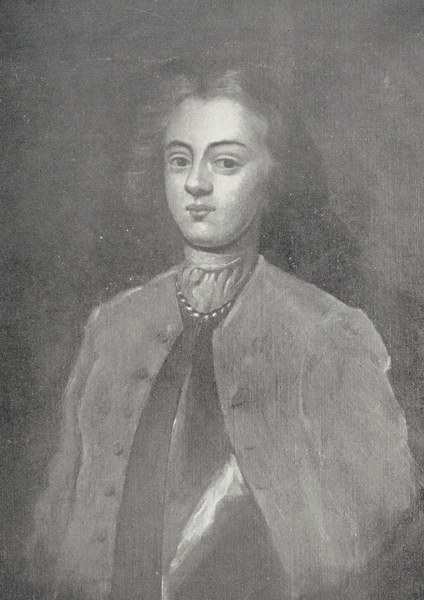
William Fairfax
b. 1691 · d. 1757
Colonial-era owner and builder of (c. 1741); cousin and Virginia agent of Thomas Fairfax, 6th Lord Fairfax of Cameron, the Proprietor of the Northern Neck. President of the …
Resident · Residence · %!d(float64=1741)–%!d(float64=1757)
Nearby in time
107 South Alfred Street 107 South Alfred Street
1855 Italianate firehouse at 107 South Alfred Street, home of the Friendship Fire Company — founded 1774, the oldest volunteer fire company …
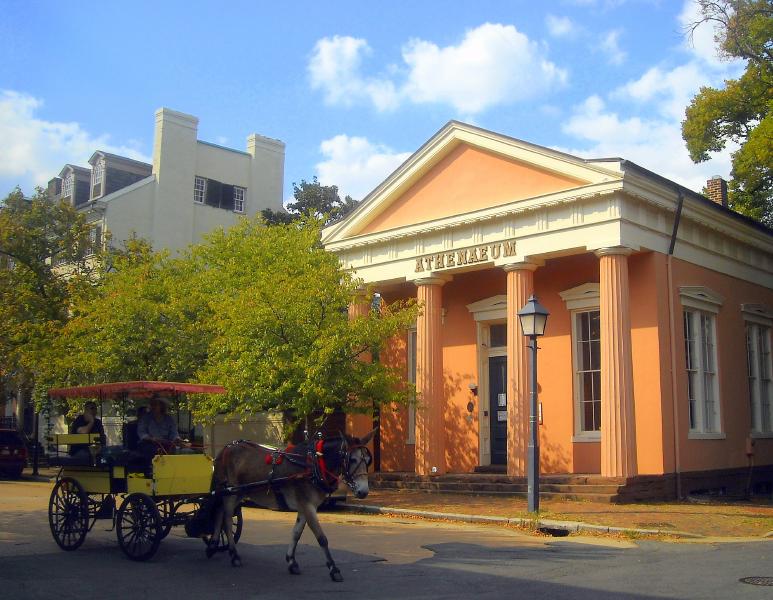
AgnosticPreachersKid at en.wikipedia · via Wikimedia Commons · CC BY-SA 3.0 Old and Historic Alexandria District, the colonial-through-antebellum core of the city, listed on the National Register in 1966.
413 Prince Street 413 Prince Street
Early-19th-century brick building used as the Bank of Potomac's executive office and as a Virginia governor's residence. NRHP-listed 2025.
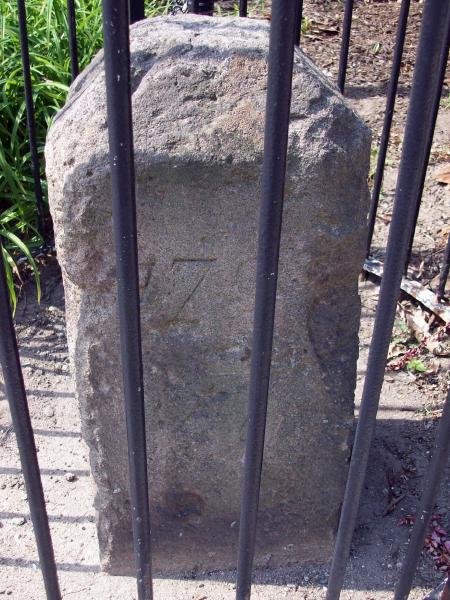
Bruce Andersen from Washington, DC · via Wikimedia Commons · CC BY-SA 2.0 1220 Wilkes Street
Sandstone boundary marker placed 1791 to mark the southwest corner of the original District of Columbia diamond. NRHP-listed 1991.
Nearby in space
Richmond Highway Richmond Highway
~8,656-acre U.S. Army installation along Richmond Highway in Fairfax County, established 1917 as Camp A.A. Humphreys, renamed Fort Humphreys …
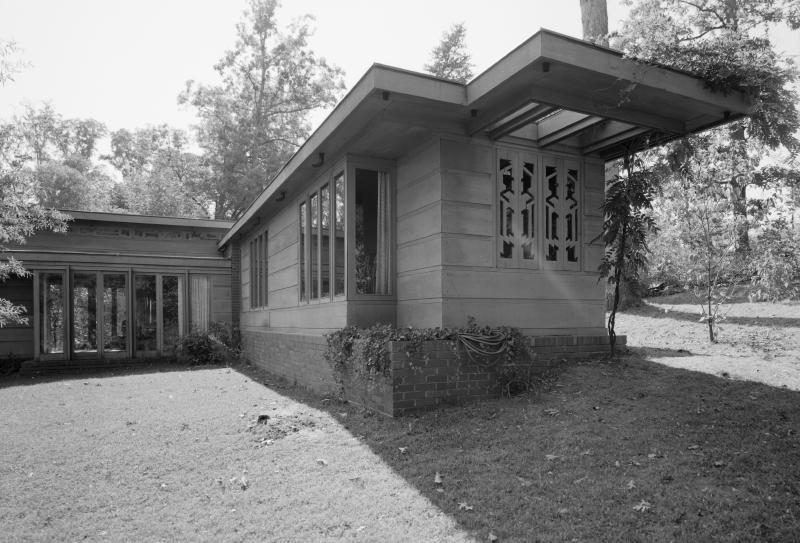
Unknown author Unknown author · via Wikimedia Commons · Public domain 9000 Richmond Highway
Usonian house built in 1940 for journalist Loren Pope; relocated to the parcel in 1964 to escape Interstate 66 construction at its …
9000 Richmond Highway 9000 Richmond Highway
Federal-style brick mansion built 1800–1805 by and on a 2,000-acre tract carved from the Mount Vernon estate as their wedding gift from .
Ken Lund from Reno, Nevada, USA · via Wikimedia Commons · CC BY-SA 2.0 3200 Mount Vernon Memorial Highway
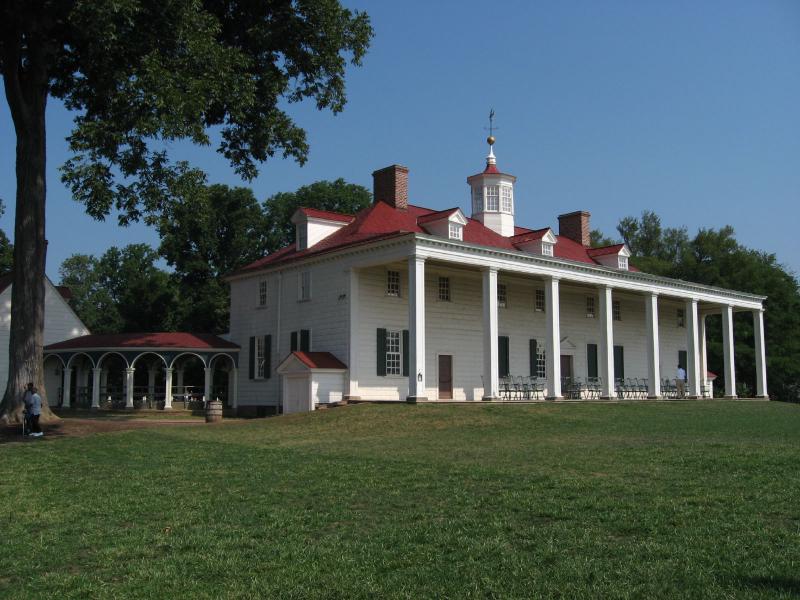
Five-farm plantation on the Potomac owned by George Washington from 1761 until his death in 1799; home to Washington, his family, and more …
Now
No current occupant on file. Are you, or someone you know, the present occupant? Claim this place to add operating hours, a current photo, and a short note.
Sources
- 1.
Wikipedia, "Belvoir (plantation)" article, accessed 2026-05-03. Documents William Fairfax's c. 1741 construction of the manor; 2,200-acre tract on the Potomac's western bank; the 1783 fire and 1814 lightning strike that destroyed the structure; and the connection to the modern Fort Belvoir installation.
Website https://en.wikipedia.org/wiki/Belvoir_(plantation) →
- 2.
George Washington's Mount Vernon (Mount Vernon Ladies' Association), William Fairfax biographical entry, accessed 2026-05-03. Documents the Belvoir-Mount Vernon four-mile proximity, William Fairfax's mentorship of young Washington, and the Fairfax family's 1773 departure for England.
Website https://www.mountvernon.org/library/digitalhistory/digital-encyclopedia/article/william-fairfax/ →
- 3.
National Park Service / National Register of Historic Places listing for the Belvoir Manor archaeological site, on the Fort Belvoir installation parcel. Documents the preservation of the foundation traces and the trail-accessible interpretive context maintained by the U.S. Army at Fort Belvoir in coordination with NPS.
Government record
See something wrong?
Every correction is logged dated to this page. Family history, old photographs, or a citation we missed — everything goes into the file.