
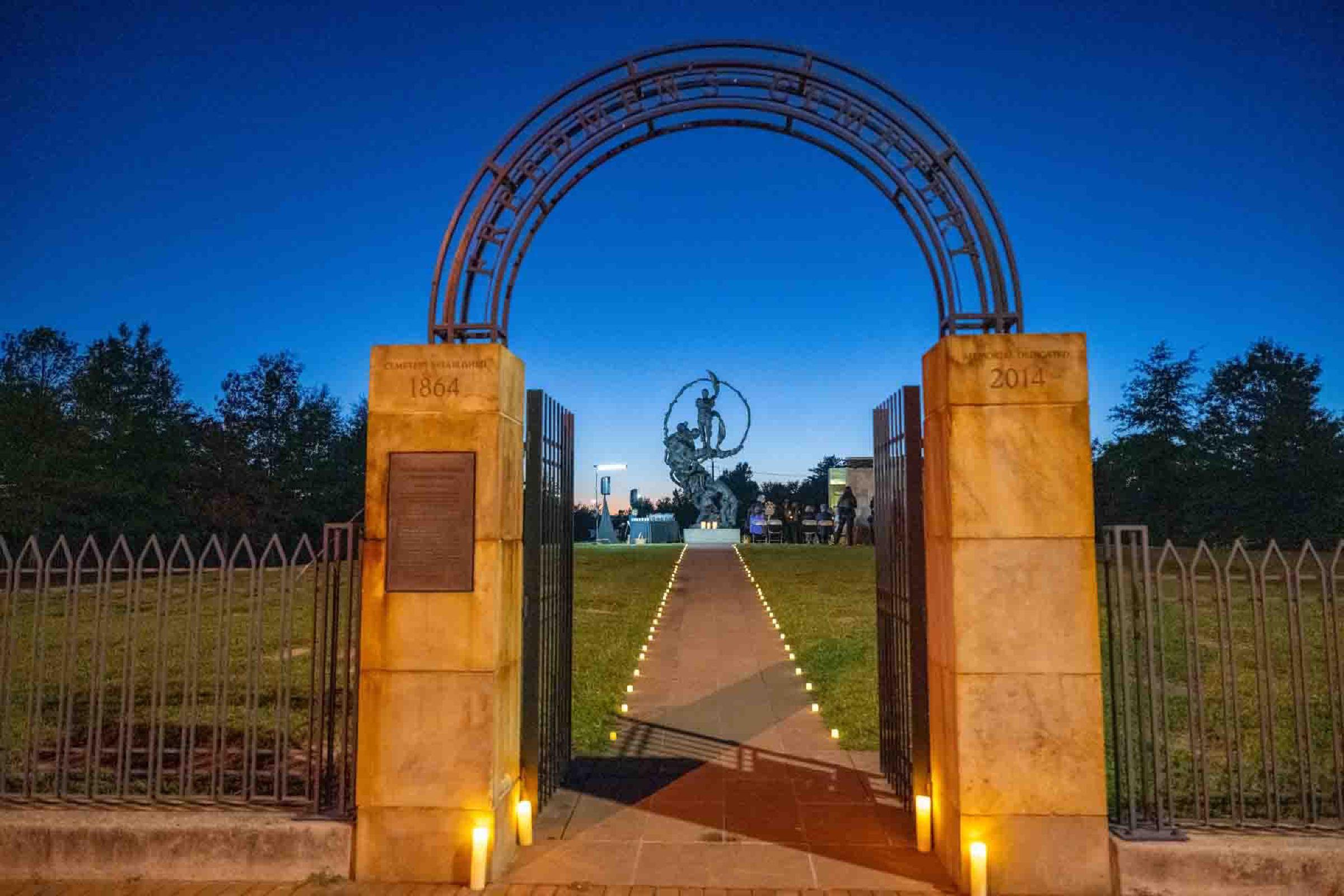
1001
South Washington Street
Burial ground established in 1864 by the Union military government on the southern edge of Federally-occupied Alexandria for self-emancipated Black people — “contrabands” in wartime legal usage — who reached Union lines and the African American community that grew up around them. Freedmen’s Bureau records document at least 1,711 burials through 1869; more than half were infants and children. Paved over in the twentieth century for commercial and highway uses; rediscovered through the long advocacy campaign of the Friends of Freedmen’s Cemetery (founded 1997) and reopened as a public memorial in 2014 with Mario Chiodo’s bronze sculpture “The Path of Thorns and Roses” at its center.
- 1864
- Extant
- National Register of Historic Places
Place narrative
The cemetery was established in 1864 by the Union military government on the southern edge of Federally-occupied Alexandria, at the corner of what is now South Washington and Church Streets, as a burial ground for self-emancipated Black people — “contrabands” in the period’s legal usage — who had reached Union lines, and the African American community that grew up around them in the wartime city [1] City of Alexandria, "Contrabands and Freedmen Cemetery Memorial" Government record .
Freedmen’s Bureau records document at least 1,711 burials through 1869, when the Bureau’s record-keeping for the cemetery ended; archaeology completed in advance of the 2014 memorial identified 631 specific grave locations [2] Boyd Sipe, archaeological data recovery report (2014) Government record . The single most arresting statistic in those records is the age distribution: more than half of those buried are infants and children under sixteen — a measure of the brutal conditions of wartime displacement, the disease environment of an occupied city, and the precariousness of life for newly freed families in the cemetery’s brief active years [1] City of Alexandria, "Contrabands and Freedmen Cemetery Memorial" Government record [3] Laura Trieschmann, "The Faithful Contrabands…" (2015) Article .
The 1865 removal of the soldiers
In January 1865, a delegation of African American soldiers and Alexandria’s free Black community protested that 118 United States Colored Troops — men who had died in service to the Union — had been buried in the Freedmen’s Cemetery rather than alongside white Union soldiers at the Alexandria National Cemetery. After the protest, the Federal government relocated those 118 graves to Alexandria National Cemetery. It is the first documented integration of an American military cemetery [3] Laura Trieschmann, "The Faithful Contrabands…" (2015) Article .
Erasure, 1880s–1980s
With the Freedmen’s Bureau gone and no organized stewardship, the cemetery passed out of public memory. Its surface was successively paved over for a gas station, an office building, and an off-ramp of the Capital Beltway. By the late twentieth century the burial ground was physically invisible above the grade — but the 1,711 individuals remained where they had been buried, beneath the asphalt [1] City of Alexandria, "Contrabands and Freedmen Cemetery Memorial" Government record .
Recovery, 1997–2014
The recovery of the cemetery was the work of a decades-long advocacy campaign. Friends of Freedmen’s Cemetery organized in 1997; a state historical highway marker was installed in 2000; the site was listed on the National Register of Historic Places in 2012. Archaeological data recovery, completed in 2014, mapped the surviving graves and informed the design of a public memorial [2] Boyd Sipe, archaeological data recovery report (2014) Government record .
The memorial — designed around Mario Chiodo’s bronze sculpture “The Path of Thorns and Roses” — was dedicated in September 2014. At its entrance, twin stone pillars carry the dates that bracket the history: “CEMETERY ESTABLISHED 1864” at the left, “MEMORIAL DEDICATED 2014” at the right [1] City of Alexandria, "Contrabands and Freedmen Cemetery Memorial" Government record [4] Friends of Freedmen's Cemetery Website .
We must always remember the sacrifices of those laid to rest here. — Lillie Finklea, President, Friends of Freedmen’s Cemetery [1] City of Alexandria, "Contrabands and Freedmen Cemetery Memorial" Government record
The site is open dawn to dusk at 1001 South Washington Street, at the intersection with Church Street. A tenth-anniversary candlelight vigil was held at the memorial in 2024.
Timeline
8 chronological entries across 3 eras.
Cemetery established by Union military government [1] Source City of Alexandria, "Contrabands and Freedmen Cemetery Memorial"
Friends of Freedmen's Cemetery organized [3] Source Friends of Freedmen's Cemetery
Virginia state historical highway marker installed [1] Source City of Alexandria, "Contrabands and Freedmen Cemetery Memorial"
National Register of Historic Places listing [1] Source City of Alexandria, "Contrabands and Freedmen Cemetery Memorial"
Memorial dedicated; Mario Chiodo sculpture installed [1] Source City of Alexandria, "Contrabands and Freedmen Cemetery Memorial"
Tenth-anniversary candlelight vigil [1] Source City of Alexandria, "Contrabands and Freedmen Cemetery Memorial"
No images yet — contribute a photo.
Nearby in time
201 Prince Street 201 Prince Street
Greek Revival temple-front building completed 1851 at 201 Prince Street as the Bank of the Old Dominion. Used during the Civil War as a …
1100 Wilkes Street 1100 Wilkes Street
Cluster of twelve adjacent burial grounds stretching across the 1100 block of Wilkes Street, including Methodist Protestant, Presbyterian, …
Cameron Station Boulevard Cameron Station Boulevard
45-acre civic park laid out across the former parade-ground center of during the 1998–2002 LCOR redevelopment of the parcel. Named for Ben …
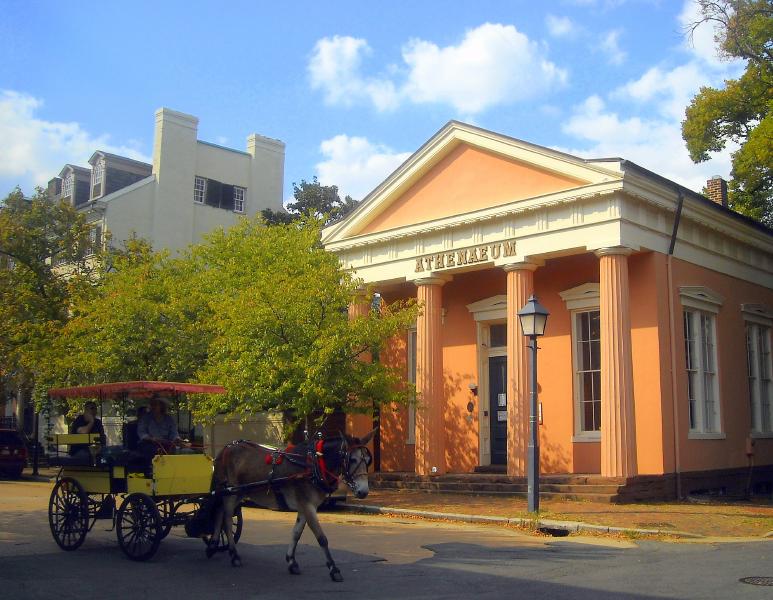
AgnosticPreachersKid at en.wikipedia · via Wikimedia Commons · CC BY-SA 3.0 201 Prince Street
Late-19th-century commercial building at the corner of Prince and Lee streets, an early local example of small-town bank architecture. …
Nearby in space
1100 Wilkes Street 1100 Wilkes Street
Cluster of twelve adjacent burial grounds stretching across the 1100 block of Wilkes Street, including Methodist Protestant, Presbyterian, …
606 South Washington Street 606 South Washington Street
Mid-19th-century chapel, part of Alexandria's antebellum African Methodist Episcopal congregation. NRHP-listed 2004.
411 South Columbus Street 411 South Columbus Street
Late-19th-century Black fraternal lodge, part of Alexandria's African-American civic infrastructure during Jim Crow. NRHP-listed 2004.
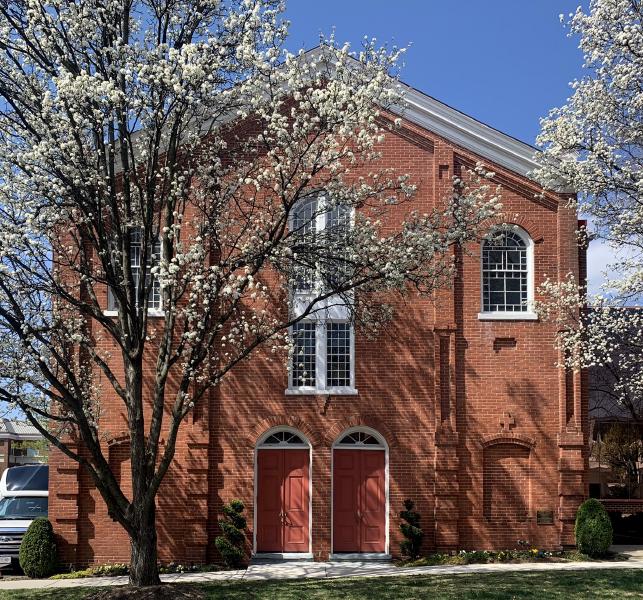
APK · via Wikimedia Commons · CC BY-SA 4.0 313 South Alfred Street
One of the oldest African-American Baptist congregations in the United States, founded in 1803; present sanctuary erected 1855. NRHP-listed …
Now
No current occupant on file. Are you, or someone you know, the present occupant? Claim this place to add operating hours, a current photo, and a short note.
Commonwealth Avenue
Named for The Commonwealth of Virginia, c. 1894.
Interpretive signs nearby
The City of Alexandria has installed 2 historical interpretive signs within walking distance of this place. Each link below opens the sign's page on this site, with the full image and trail context.
1001 S Washington St
Contrabands and Freedmen Cemetery Memorial
716 Church St
Sources
- 1.
City of Alexandria, "Visit Contrabands and Freedmen Cemetery Memorial," alexandriava.gov/FreedmenMemorial, accessed 2026. The authoritative municipal interpretive page for the memorial, citing Trieschmann (2015), Sipe (2014), and the Alexandria Black History Museum exhibit "The Journey to Be Free" (2014). Used here for the 1864 establishment date, the at-least-1,711-burials Freedmen's Bureau count, the "more than half infants and children" demographic detail, the 1997 founding of Friends of Freedmen's Cemetery, the 2000 state historical marker, the September 2014 memorial dedication, the Mario Chiodo sculpture, and the Lillie Finklea memorial inscription.
Government record https://www.alexandriava.gov/FreedmenMemorial →
- 2.
Boyd Sipe, archaeological data recovery report for the Contrabands and Freedmen Cemetery Memorial site, 2014. The technical report that mapped 631 surviving grave locations beneath the post-1880s asphalt and informed the memorial's site design.
Government record
- 3.
Laura Trieschmann, "The Faithful Contrabands will be Justly Entitled to their Share," 2015. Scholarly history of the Contrabands and Freedmen Cemetery, the wartime African American community in Federally-occupied Alexandria, and the January 1865 protest that produced the first documented integration of an American military cemetery.
Article
- 4.
Friends of Freedmen's Cemetery, the local community advocacy organization founded in 1997 that led the decades-long campaign for recovery and public memorialization of the cemetery. The organization continues to host commemorative programs at the memorial, including the 2024 tenth-anniversary candlelight vigil.
Website
See something wrong?
Every correction is logged dated to this page. Family history, old photographs, or a citation we missed — everything goes into the file.