
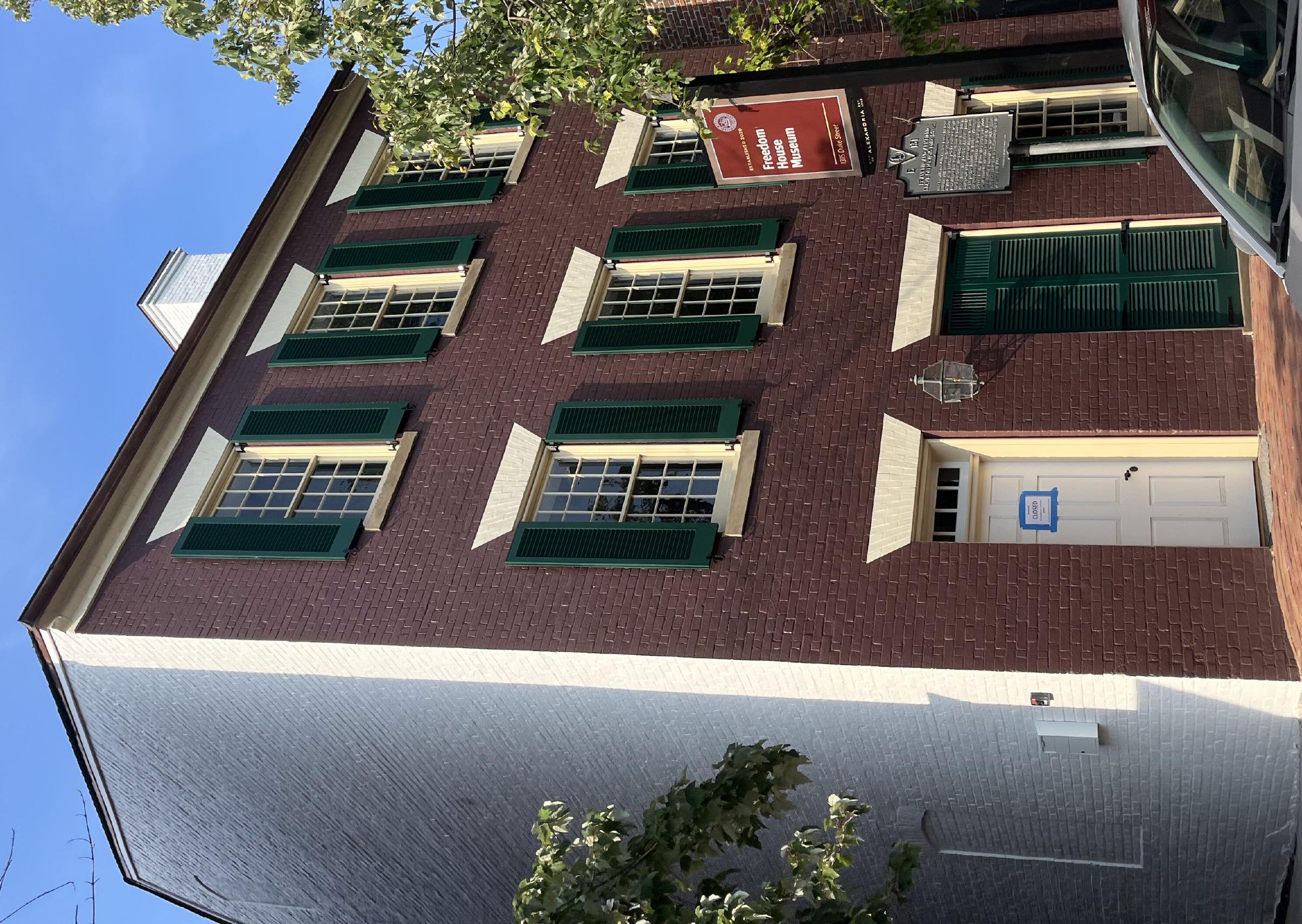
1315
Duke Street
Federal-style brick house at 1315 Duke Street built in the 1810s by Brigadier General Robert Young of the DC Militia; from 1828 to 1837 the headquarters of Franklin & Armfield, the largest domestic slave-trading firm in the United States; the site through which ship manifests record at least 5,000 enslaved people were trafficked to Louisiana cotton and sugar plantations. Continued under successor operators through 1861, occupied by Union forces on May 24, 1861, and later used as L’Ouverture Hospital for U.S. Colored Troops. Now the Freedom House Museum, a National Historic Landmark; the building’s exterior was restored in 2024–25 to its original Federal appearance.
- 1812approx
- Federal
- Extant
- National Historic LandmarkNational Register of Historic Places
Place narrative
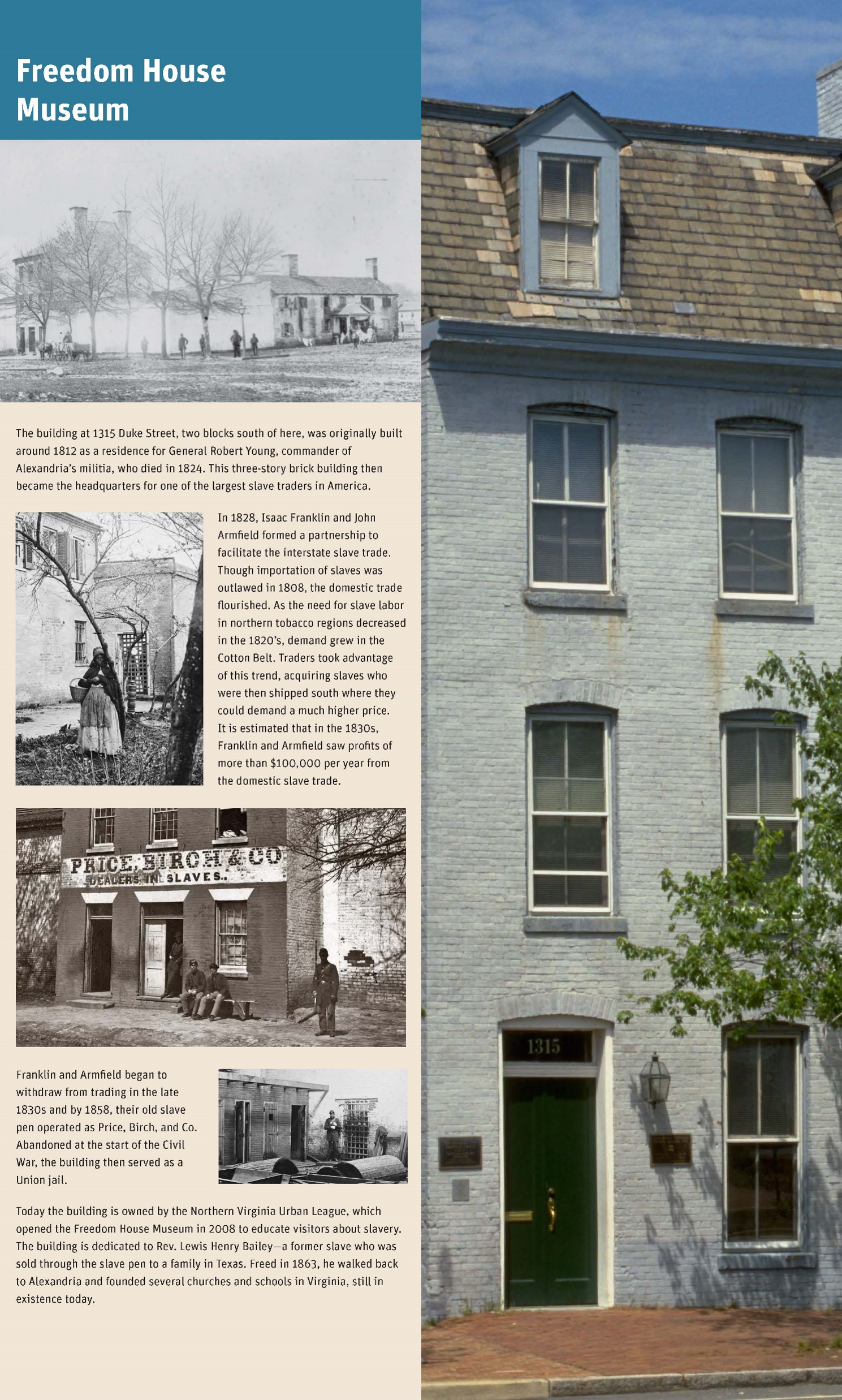
The three-story brick Federal-style house at 1315 Duke Street was built in the 1810s by Brigadier General Robert Young, an officer in the District of Columbia militia, on what was then the western edge of town [1] City of Alexandria, "History of 1315 Duke Street" Government record . Financial struggles forced Young to sell.
The Franklin & Armfield slave-trading complex (1828–1837)
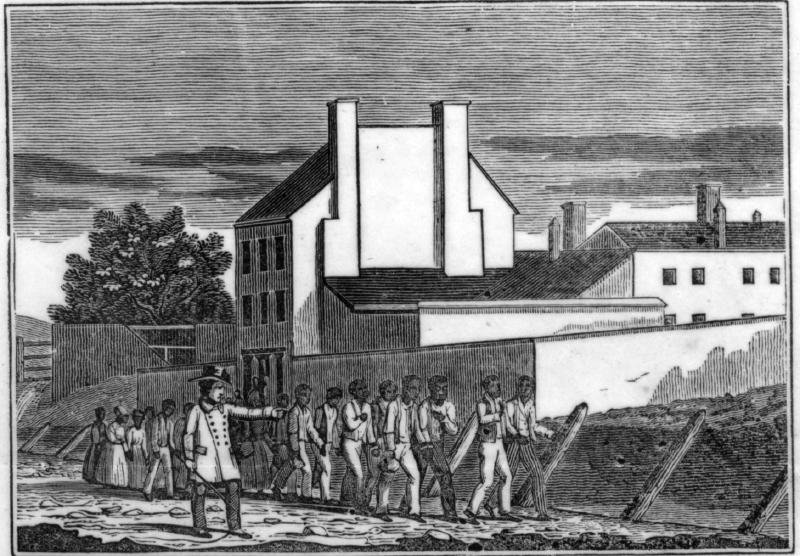
By 1828 the property had been leased by Isaac Franklin Isaac Franklin b. 1789 · d. 1846 Tennessee-born slave trader who, with partner John Armfield, operated the largest domestic slave trading firm in the United States during the 1830s. Franklin managed the firm's New … and John Armfield as the headquarters of their newly formed partnership; in 1832 they purchased the building outright along with three adjacent lots [2] Wikipedia, "Franklin and Armfield Office" Website . They converted the house into what contemporary documents called a “Negro Jail” or slave pen — adding structures behind the house with high whitewashed-brick walls, grated doors and windows. Abolitionist witness accounts describe two enclosed yards behind the main residence: enslaved men were held in a yard to the west, while women and children were kept in a yard to the east, the two yards separated by a passage and a strong grated-iron door [1] City of Alexandria, "History of 1315 Duke Street" Government record . Alexandria’s substantial Quaker population supplied much of the local opposition to the trade and produced many of these witness accounts.
With trading agents across Virginia, Maryland, and Delaware, Franklin & Armfield grew quickly. Ship manifests record at least 5,000 enslaved people trafficked through the Duke Street office; by the 1830s the firm was selling roughly one thousand people annually, controlling nearly half the coastal slave trade from the upper South to Louisiana — the cotton and sugar plantations of the Deep South [1] City of Alexandria, "History of 1315 Duke Street" Government record [2] Wikipedia, "Franklin and Armfield Office" Website . The partners shipped most of their captives to New Orleans and Natchez aboard the firm’s three brigs — the Tribune, the Uncas, and the Isaac Franklin — with overland coffles also departing regularly from the Duke Street compound for Tennessee [3] Powell, History of Old Alexandria, 1928 Book . Franklin managed sales from Natchez; Armfield ran the Alexandria compound and procurement. Their combined wealth by the 1830s, scaled to 2021 dollars, ran into the billions [2] Wikipedia, "Franklin and Armfield Office" Website . Franklin retired from active trade in 1837.
Successors: Kephart, Price, Birch (1846–1861)
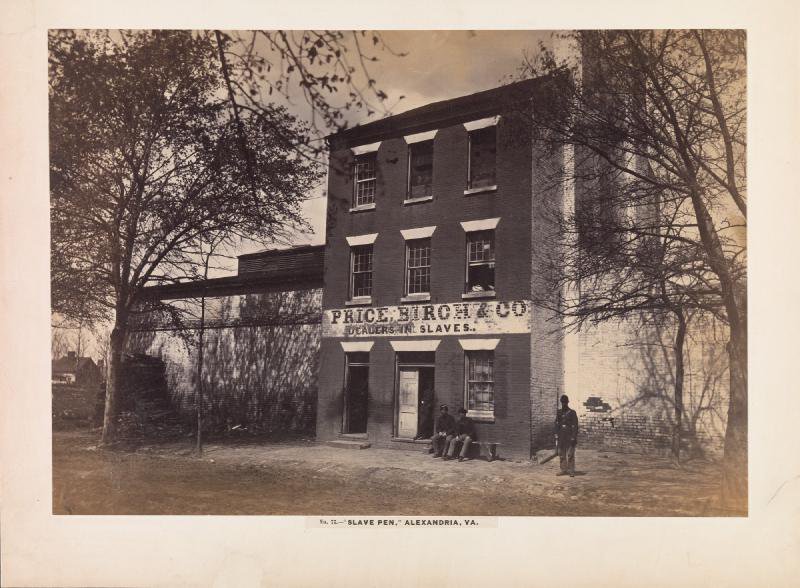
In 1846 the property was sold to George Kephart, a former Franklin & Armfield agent who became, in Frederic Bancroft’s 1931 phrase, “the chief slave-dealing firm in [Virginia] and perhaps anywhere along the border between free and slave states” [4] Frederic Bancroft, "Slave Trading in the Old South" (1931) Book . Kephart was later implicated in the Washington-area kidnapping that produced Solomon Northup’s Twelve Years a Slave [2] Wikipedia, "Franklin and Armfield Office" Website . Kephart was succeeded by C. M. Price and John C. Cook, and from 1858 the firm operating on Duke Street was Price, Birch & Co., whose painted sign — “PRICE, BIRCH & CO. DEALERS IN SLAVES” — appears on the facade in the most widely-reproduced Civil War-era photographs of the building.
Civil War: liberation, prison, and L’Ouverture Hospital (1861–1866)
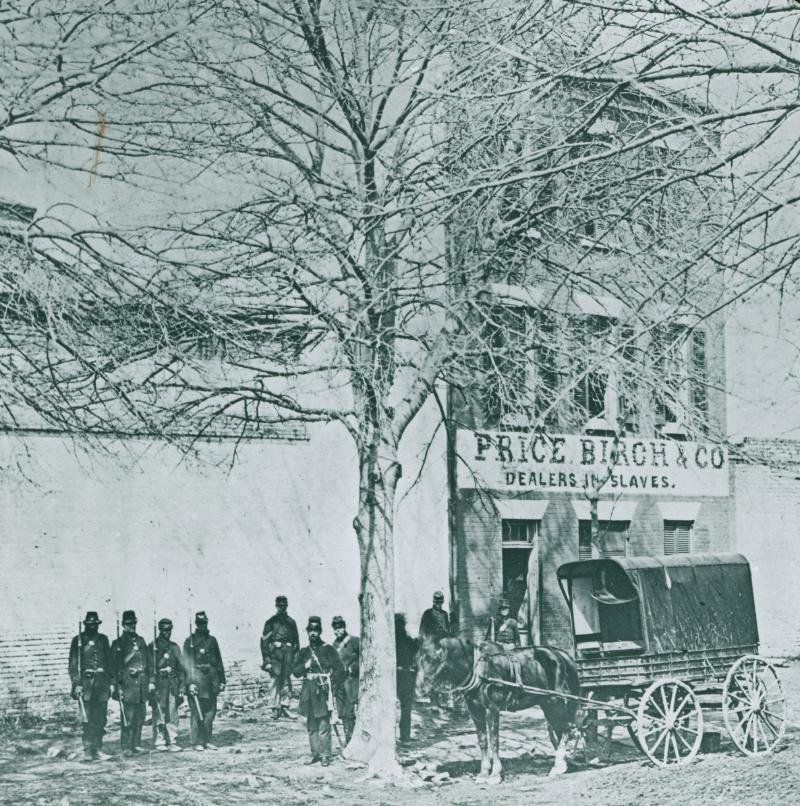
Union forces occupied Alexandria on May 24, 1861, and entered the slave pen to find it abandoned by Price and Birch — except, by one near-contemporary account, “an old man, chained to the middle of the floor by the leg” [1] City of Alexandria, "History of 1315 Duke Street" Government record . Federal authorities seized the compound and operated it as a military prison for Union deserters until February 2, 1866 [2] Wikipedia, "Franklin and Armfield Office" Website . Later in the war the building was repurposed as L’Ouverture Hospital, named for the Haitian revolutionary Toussaint L’Ouverture, where the U.S. Army cared for Black soldiers of the United States Colored Troops; in the same period the surrounding pens served as barracks for self-emancipated people who had reached Union lines and become known in the official records as “contrabands.”
Demolition, apartments, museum (1866–2026)
After the war most of the slave-pen compound was demolished by a private developer; only the original residence and its rear kitchen wing survived, their bricks possibly reused in adjacent townhouse construction [2] Wikipedia, "Franklin and Armfield Office" Website . The house spent the next century as a boarding house and apartments; around 1905 an additional story was added and the original Federal facade was concealed behind a vernacular Empire-style remodel. In 1978 the building was designated a National Historic Landmark as the “Franklin and Armfield Office.” Major interior renovation in 1984 converted the building to office space. In 1997 the Northern Virginia Urban League purchased the property and opened a small Freedom House Museum in the basement. The City of Alexandria acquired the property in March 2020, and the expanded Freedom House Museum reopened in June 2022 with three exhibits exploring Black experience in Alexandria. Exterior restoration in 2024–2025 removed the c. 1905 modifications and recreated the building’s original Federal appearance using period photographs [1] City of Alexandria, "History of 1315 Duke Street" Government record .
Timeline
15 chronological entries across 5 eras.
- –
Isaac Franklin co-owned the firm and managed the New Orleans end of the trade. [1] Source Franklin & Armfield ledgers
- –
John Armfield ran the Alexandria compound day-to-day, assembling coffles and shipments. [1] Source Franklin & Armfield ledgers [2] Source Powell, History of Old Alexandria, 1928
- –
An estimated 1,200 enslaved people passed through the Duke Street compound in a typical year at the firm's peak; individual names are preserved in surviving Franklin & Armfield manifests. [1] Source Franklin & Armfield ledgers
Franklin & Armfield acquire the Duke Street property [1] Source Franklin & Armfield ledgers
Franklin & Armfield lease 1315 Duke Street as slave-trading headquarters [1] Source Franklin & Armfield ledgers [3] Source City of Alexandria, "History of 1315 Duke Street"
Franklin & Armfield purchase the Duke Street property and three adjacent lots [4] Source Wikipedia, "Franklin and Armfield Office"
Franklin retires; firm restructures [1] Source Franklin & Armfield ledgers
George Kephart acquires the slave pen [5] Source Frederic Bancroft, "Slave Trading in the Old South" (1931) [4] Source Wikipedia, "Franklin and Armfield Office"
Price, Birch & Co. take over the slave pen [3] Source City of Alexandria, "History of 1315 Duke Street"
National Historic Landmark designation [4] Source Wikipedia, "Franklin and Armfield Office"
Northern Virginia Urban League purchases the property [3] Source City of Alexandria, "History of 1315 Duke Street"
City of Alexandria acquires the property [3] Source City of Alexandria, "History of 1315 Duke Street"
Reopening as the expanded Freedom House Museum [3] Source City of Alexandria, "History of 1315 Duke Street"
Exterior restored to original Federal appearance [4] Source Wikipedia, "Franklin and Armfield Office" [3] Source City of Alexandria, "History of 1315 Duke Street"
The building
- Federal
Gallery
Placeholder illustration of Freedom House Museum. Seed placeholder — KingSt.com, 2026. To be replaced with archival photograph. 
Secondary placeholder view of Freedom House Museum. Seed placeholder — KingSt.com, 2026. To be replaced with archival photograph. 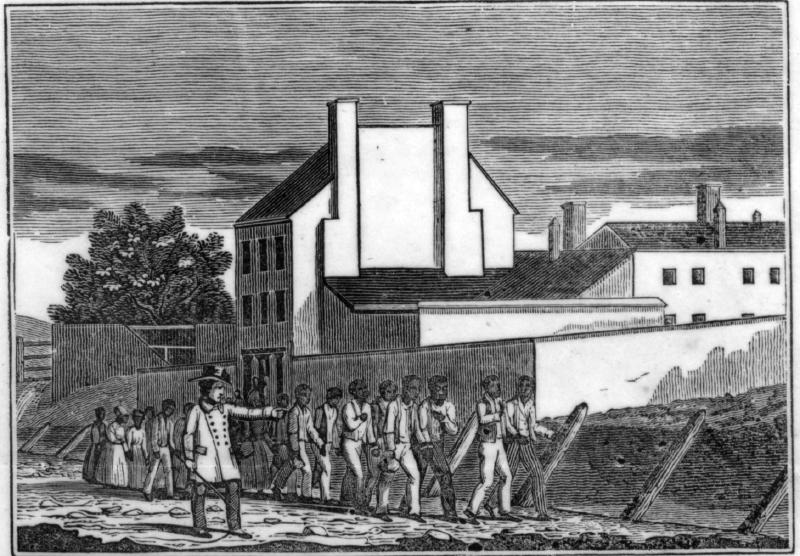
Antebellum engraving from 1836 — an overseer marches a coffle of enslaved men out of the Franklin & Armfield compound at 1315 Duke Street; enslaved women stand at left. The walled main building visible behind is the Federal-style house still standing today. American Anti-Slavery Society engraving, 1836 (public domain by age) 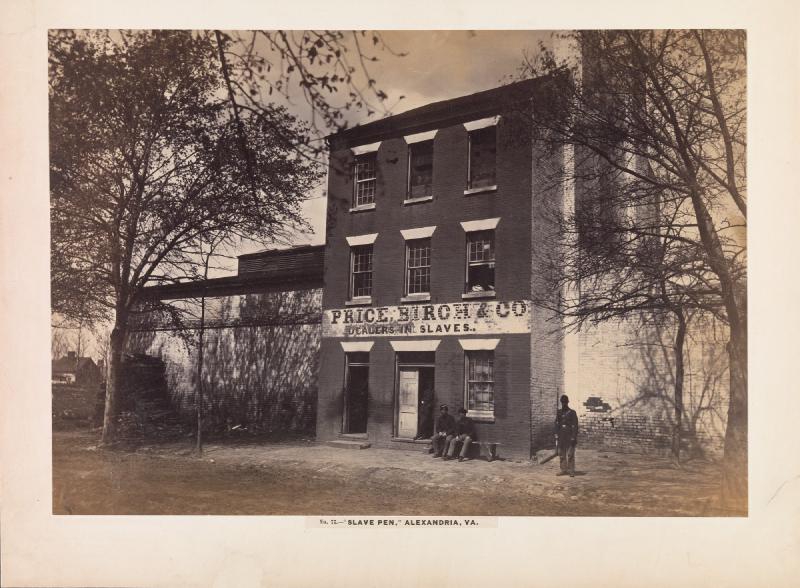
Andrew J. Russell's iconic Civil War-era photograph of 1315 Duke Street, captioned "SLAVE PEN, ALEXANDRIA, VA." The "PRICE, BIRCH & CO. DEALERS IN SLAVES" sign is visible across the facade; by the time of the photograph, Union forces had occupied the compound and the building was in use as a military prison. Andrew J. Russell, "Slave Pen, Alexandria, Va.," c. 1863 — Metropolitan Museum of Art (public domain by age) 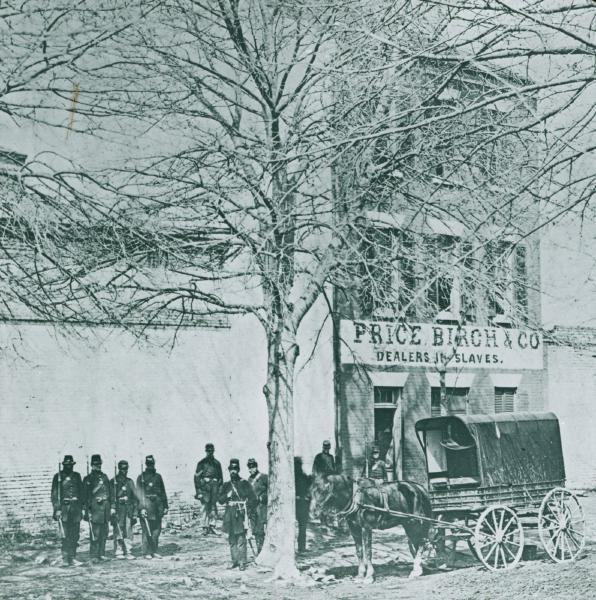
Wider Civil War-era photograph of the slave pen, showing Union troops formed up along the wall after Federal forces seized the compound on May 24, 1861. The "PRICE, BIRCH & CO. DEALERS IN SLAVES" sign — the firm that ran the building from 1858 to 1861 — was left in place by the occupying army. Civil War-era photograph of Price, Birch & Co., 1315 Duke Street, c. 1862-1865 (public domain by age)
Connected
Isaac Franklin
b. 1789 · d. 1846
Tennessee-born slave trader who, with partner John Armfield, operated the largest domestic slave trading firm in the United States during the 1830s. Franklin managed the firm's New …
Owner · Slave pen · %!d(float64=1828)–%!d(float64=1836)
John Armfield
b. 1797 · d. 1871
North Carolina–born slave trader who managed the Alexandria operations of Franklin & Armfield from 1828 to 1836, directing the collection and forced transport of thousands of …
Operator · Slave pen · %!d(float64=1828)–%!d(float64=1836)
Freedmen of the Contrabands Camp
founded 1861
Collective entity representing the several thousand formerly enslaved people who fled to Union-occupied Alexandria during the Civil War, settling in camps at Shuter's Hill, around …
Enslaved person · Slave pen · %!d(float64=1828)–%!d(float64=1836)
Nearby in time
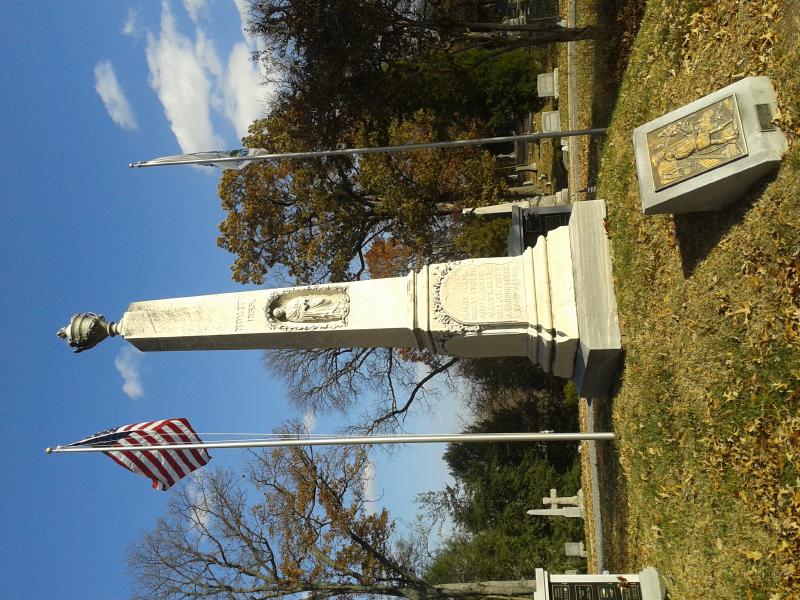
Ser Amantio di Nicolao · via Wikimedia Commons · CC BY-SA 3.0 2823 King Street
Twenty-two-acre garden cemetery in Alexandria's Rosemont district, chartered 1856 by thirty Alexandrians on land sold from the estate of …
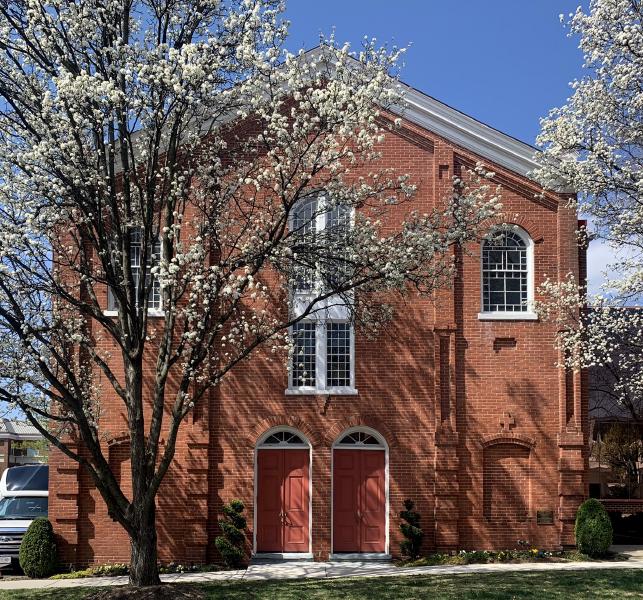
APK · via Wikimedia Commons · CC BY-SA 4.0 313 South Alfred Street
One of the oldest African-American Baptist congregations in the United States, founded in 1803; present sanctuary erected 1855. NRHP-listed …
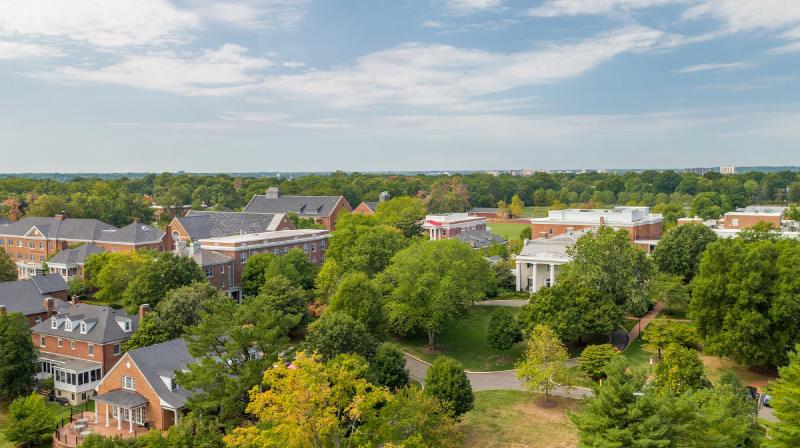
Episcopal High School's 100-acre campus from above, September 2019 — Hoxton House (white columns, right) anchors the south end; the Collegiate Gothic academic buildings ring the central quad. Aerial view of Episcopal High School, by Penguino2020 / Wikimedia Commons, CC BY-SA 4.0 (2019) 1200 North Quaker Lane
The first high school in Virginia, founded 1839 by Bishop William Meade of the Episcopal Diocese on a 100-acre campus west of Old Town. …
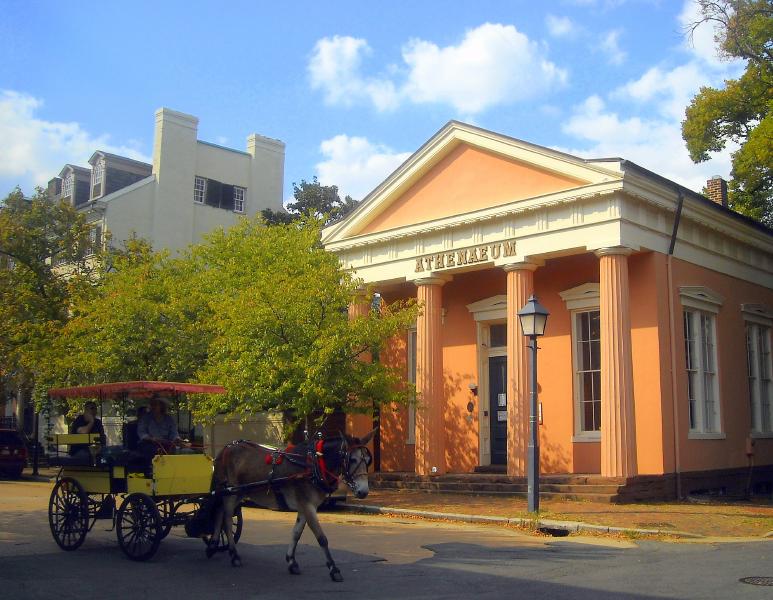
AgnosticPreachersKid at en.wikipedia · via Wikimedia Commons · CC BY-SA 3.0 Old and Historic Alexandria District, the colonial-through-antebellum core of the city, listed on the National Register in 1966.
Nearby in space
Placeholder illustration of Louverture Hospital Site. Seed placeholder — KingSt.com, 2026. To be replaced with archival photograph. 219 South Payne Street
Union Army hospital established in February 1864 for U.S. Colored Troops and Black civilian refugees in occupied Alexandria. Named for …
1200 Duke Street 1200 Duke Street
Headquarters of T. J. Fannon & Sons at 1200 Duke Street, the Alexandria heating-fuel firm founded by Thomas J. Fannon as a wood-and-coal …
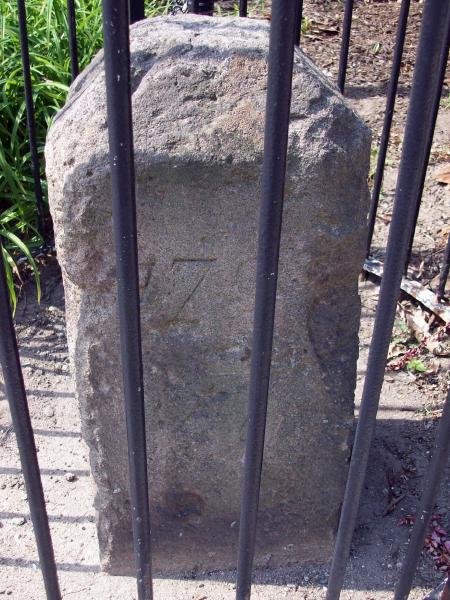
Bruce Andersen from Washington, DC · via Wikimedia Commons · CC BY-SA 2.0 1220 Wilkes Street
Sandstone boundary marker placed 1791 to mark the southwest corner of the original District of Columbia diamond. NRHP-listed 1991.
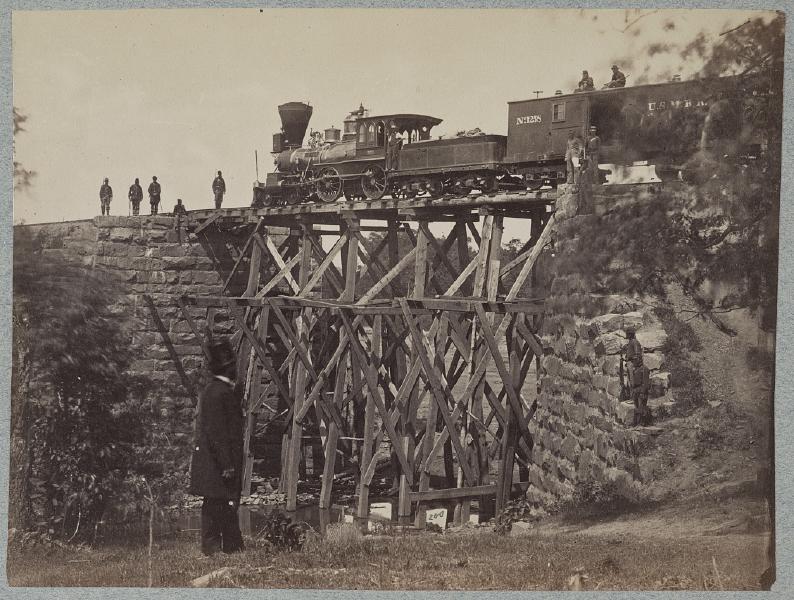
Bridge on Orange & Alexandria Railroad · Library of Congress, Prints & Photographs Division · http://www.loc.gov/item/2012649966/ Jamieson Avenue at Hooff's Run
1851 stone arch railroad bridge, in continuous use since the eve of the Civil War. NRHP-listed 2003.
Now
No current occupant on file. Are you, or someone you know, the present occupant? Claim this place to add operating hours, a current photo, and a short note.
Duke Street
Named for Royal duke (likely the Duke of Cumberland, son of George II), c. 1749.
Interpretive signs nearby
The City of Alexandria has installed 4 historical interpretive signs within walking distance of this place. Each link below opens the sign's page on this site, with the full image and trail context.
Franklin and Armfield Slave Office (1315 Duke St)
1315 Duke St
From Slavery to Freedom and Service
1323 Duke St
1401 Duke St
L'Ouverture Hospital and Barracks
1302 Prince St
Sources
- 1.
City of Alexandria, "History of 1315 Duke Street," Office of Historic Alexandria, Freedom House Museum, accessed 2026. Authoritative municipal interpretive history of the building, drawing on the 1830 Census, historic newspapers tracking the Tribune and Uncas slave ships, Civil War-era photographs by Pywell, Brady, and Russell, the 1987 Engineering-Science archaeology report, Michael Ridgeway's 1976 thesis, Robert Gudmestad's 1999 dissertation, Calvin Schermerhorn's 2015 book, and Benjamin Skolnik's 2021 building-and-property history report. Used here for the Robert Young construction date, the "Negro Jail" terminology, the abolitionist witness accounts of the walled compound layout, the 3,750+ enslaved people exported to Louisiana, the Kephart and Price-Cook-Birch successor chain, the May 24, 1861 Union occupation, the L'Ouverture Hospital use, the 1997 NVUL purchase, and the 2024-25 exterior restoration.
Government record https://www.alexandriava.gov/museums/history-of-1315-duke-street →
- 2.
Wikipedia contributors, "Franklin and Armfield Office," Wikipedia, The Free Encyclopedia, accessed 2026. Cites the National Historic Landmark nomination, Donald Sweig's "Alexandria to New Orleans" (2014), Robert Gudmestad (2003), James Loewen, "Lies Across America" (1999), William Bowditch (1865), Frederic Bancroft (1931), the Skolnik 2021 building history, Hannah Natanson's Washington Post reporting (2019), Edward Ball, Smithsonian Magazine (2015), Moncure Conway, "Testimonies Concerning Slavery" (1865), and Robert Colby, "An Unholy Traffic" (2024). Used here for the 1832 purchase date, the "at least 5,000" ship-manifest figure, the agent network across VA/MD/DE, the ~1,000-per-year peak sales rate, Franklin's Natchez/Armfield's Alexandria division of labor, the "billions in 2021 dollars" wealth figure, the Solomon Northup connection, the February 2, 1866 military-prison closure date, the 1978 NHL designation, and the 2024-25 exterior restoration timing.
Website https://en.wikipedia.org/wiki/Franklin_and_Armfield_Office →
- 3.
Mary G. Powell, The History of Old Alexandria, Virginia, from July 13, 1749 to May 24, 1861, Richmond: William Byrd Press, 1928.
Book
- 4.
Frederic Bancroft, "Slave Trading in the Old South," Baltimore: J. H. Furst, 1931; reissued by the University of South Carolina Press, Southern Classics Series, 1996 and 2023 (ISBN 978-1-64336-427-8). The foundational scholarly history of the domestic American slave trade. Used here for Bancroft's characterization of George Kephart's operation as "the chief slave-dealing firm in [Virginia] and perhaps anywhere along the border between free and slave states."
Book
See something wrong?
Every correction is logged dated to this page. Family history, old photographs, or a citation we missed — everything goes into the file.