
201
South Washington Street
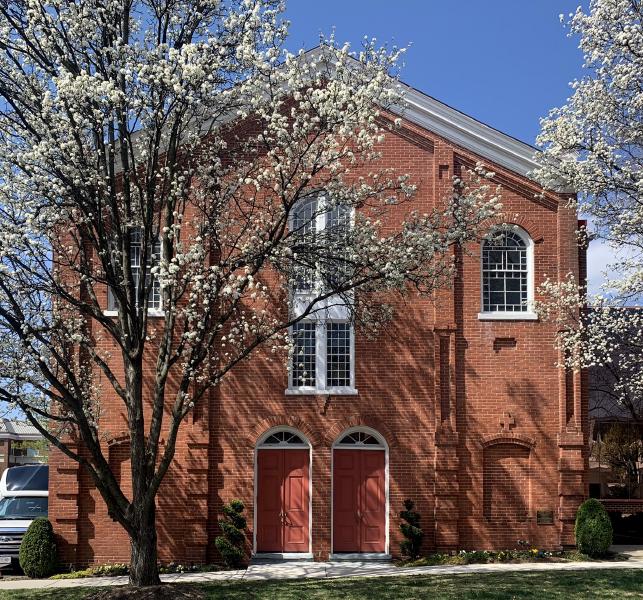
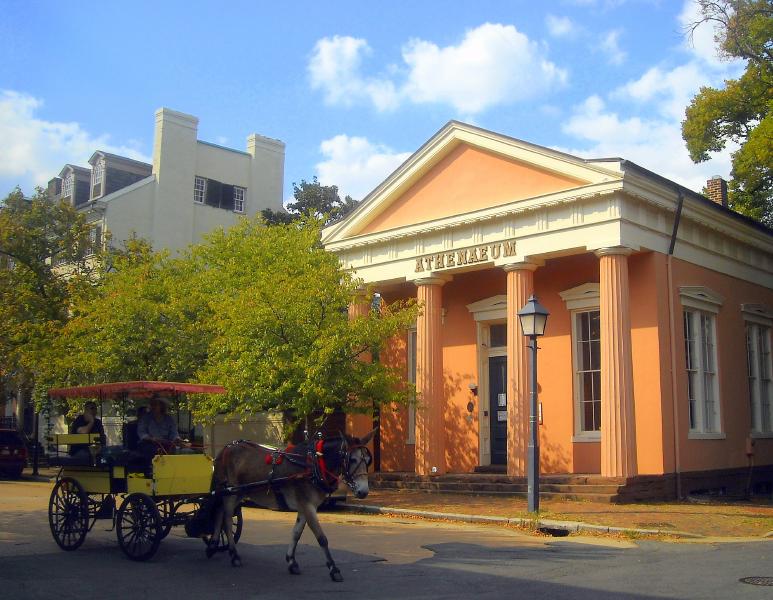
Greek Revival building completed in 1839 as the Alexandria Lyceum, a subscription library and lecture hall. Served as a Union hospital during the Civil War and, since 1985, as the city’s history museum.
- 1839
- Greek Revival
- Extant
- National Register of Historic PlacesOld and Historic Alexandria District
Place narrative
The Alexandria Lyceum Company, organized in 1834, raised subscription funds to build a permanent home for its library and its public lecture series. The finished building, completed in 1839 on the southwest corner of Prince and Washington streets, is attributed to the architect Benjamin King and is one of the earliest and purest Greek Revival buildings in the city [1] HABS Alexandria survey Government record .
The Lyceum hosted lectures on natural history, literature, and current affairs for roughly two decades. Among its speakers were John Quincy Adams and Caleb Cushing. The Lyceum’s library collection grew to several thousand volumes before the Civil War interrupted the organization’s work [2] Powell, History of Old Alexandria, 1928 Book .
During the Union occupation the building was requisitioned as a hospital [3] NARA Civil War records Government record . After the war it served as a private residence, an office building, and at one point was proposed for demolition to expand a filling station. The Alexandria Historical Society purchased and restored it in the 1970s, and since 1985 it has operated as The Lyceum, the official history museum of the city.
Timeline
5 chronological entries across 3 eras.
Reopening as the city's history museum [4] Source Alexandria Library Special Collections
The building
- Greek Revival
Gallery
Secondary placeholder view of Lyceum. Seed placeholder — KingSt.com, 2026. To be replaced with archival photograph.
Connected
Benjamin Dulany
b. 1752 · d. 1816
Maryland-born merchant and planter with extensive landholdings on both sides of the Potomac, including Shuter's Hill west of Alexandria. His household straddled the social world of …
Visitor notable · Lyceum · %!d(float64=1839)–%!d(float64=1845)
Freedmen of the Contrabands Camp
founded 1861
Collective entity representing the several thousand formerly enslaved people who fled to Union-occupied Alexandria during the Civil War, settling in camps at Shuter's Hill, around …
Resident · Hospital · %!d(float64=1862)–%!d(float64=1865)
Nearby in time
404 South Royal Street 404 South Royal Street
Mid-19th-century residence of George Lewis Seaton, a free Black master carpenter who served in the Virginia House of Delegates during …
APK · via Wikimedia Commons · CC BY-SA 4.0 313 South Alfred Street
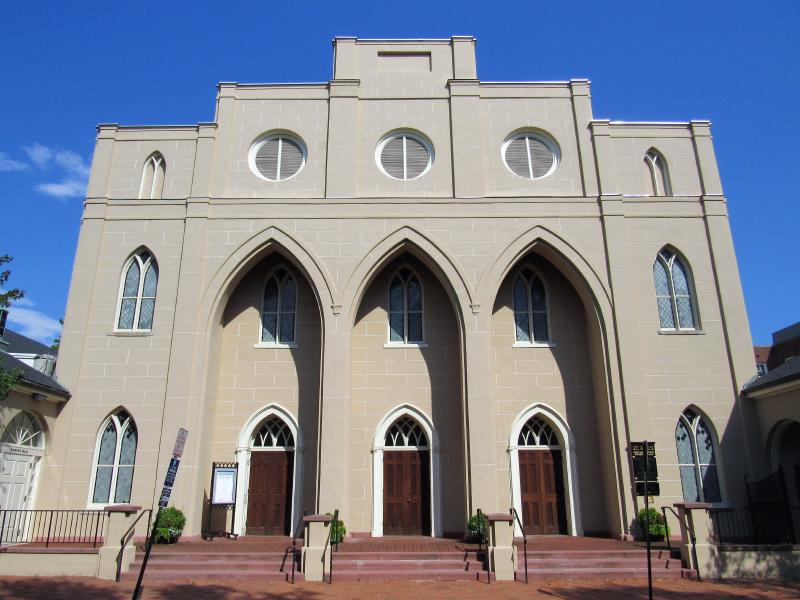
One of the oldest African-American Baptist congregations in the United States, founded in 1803; present sanctuary erected 1855. NRHP-listed …
Farragutful · via Wikimedia Commons · CC BY-SA 4.0 228 South Pitt Street
Federal-Greek Revival 1817 sanctuary, the second oldest Episcopal congregation in Alexandria after Christ Church. NRHP-listed 1985.
712 Prince Street 712 Prince Street
Federal-style 1820s townhouse later occupied by mayor and judge Henry Daingerfield's family. NRHP-listed 2019.
Nearby in space
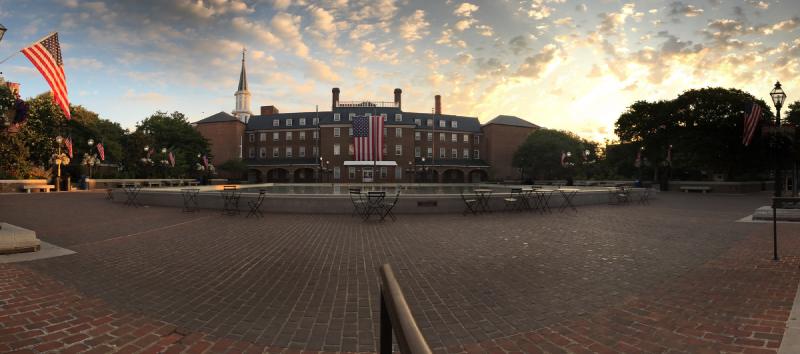
Market Square at sunrise, July 2017 — the city's eighteenth-century public square in its weekday-morning calm, framed by City Hall and the Fourth-of-July flags hung along the lamp posts. © KingSt.com, July 2017 301 King Street
Public square at 301 King Street fronting Alexandria City Hall — site of an open-air farmers market continuously operated since 1753, the …
AgnosticPreachersKid at en.wikipedia · via Wikimedia Commons · CC BY-SA 3.0 Old and Historic Alexandria District, the colonial-through-antebellum core of the city, listed on the National Register in 1966.
Ser Amantio di Nicolao Che dicono a Signa? Lo dicono a Signa. · via Wikimedia Commons · Public domain South Washington Street and Prince Street
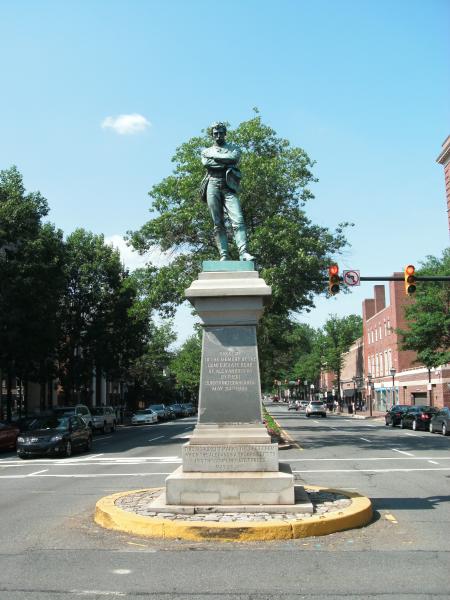
Confederate monument cast 1889 by Caspar Buberl, relocated from the intersection of Washington and Prince streets on June 2, 2020. …
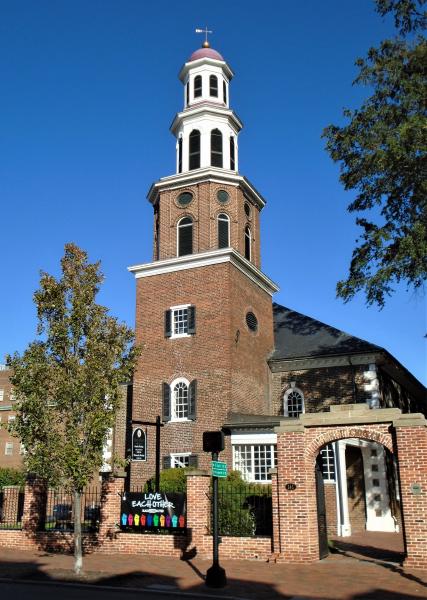
Beyond My Ken · via Wikimedia Commons · CC BY-SA 4.0 118 North Washington Street
Alexandria's Georgian-style Episcopal parish church, consecrated in 1773; pew owners included George Washington and, decades later, the Lee …
Now
No current occupant on file. Are you, or someone you know, the present occupant? Claim this place to add operating hours, a current photo, and a short note.
Commonwealth Avenue
Named for The Commonwealth of Virginia, c. 1894.
Interpretive signs nearby
The City of Alexandria has installed 12 historical interpretive signs within walking distance of this place. Each link below opens the sign's page on this site, with the full image and trail context.
Trinity United Methodist Church
114 S. Washington St.
622 King St
706A King St
631 King St
George Washington Memorial Parkway
106 N Washington St
201 S. Washington Street
604 King St
725 King St
Suffragists and a Courtroom Decision in Alexandria
200 block S. St. Asaph near Patrick St.
George Washington in Alexandria
556 King St
The Alexandria Furniture District
SW King and S. Columbus
Sources
- 1.
Historic American Buildings Survey, Alexandria, Virginia records, National Park Service / Library of Congress.
Government record
- 2.
Mary G. Powell, The History of Old Alexandria, Virginia, from July 13, 1749 to May 24, 1861, Richmond: William Byrd Press, 1928.
Book
- 3.
National Archives and Records Administration, Union Provost Marshal records and Civil War-era military correspondence (RG 109, RG 110, RG 393).
Government record
See something wrong?
Every correction is logged dated to this page. Family history, old photographs, or a citation we missed — everything goes into the file.