
221
King Street
Small frame house at the northeast corner of King and Fairfax Streets, traditionally held to be the oldest extant house in Alexandria — though the building you see today is largely a 1956 Williamsburg-styled reconstruction by a city-hired architect after a 1942 fire gutted the historic fabric. The original is associated with William Ramsay, a Scottish merchant, one of the eleven founding trustees of the town, its first postmaster, and its first (and only) honorary Lord Mayor. Now Alexandria’s official Visitor Center.
- 1749approx
- Vernacular gambrel-roof frame (1956 Williamsburg-styled reconstruction)
- Extant
- Old and Historic Alexandria DistrictHABS VA-188
Place narrative
By tradition, the original Ramsay House was built in 1724 in Dumfries, Virginia — about thirty miles south of Alexandria — by William Ramsay William Ramsay b. 1716 · d. 1785 Scottish-born merchant, one of the original trustees of Alexandria in 1749, and by local tradition the town's first postmaster and first lord mayor. His frame house on King Street … , a Scottish merchant who had emigrated from Galloway. The same tradition holds that after Alexandria’s chartering in 1749, Ramsay had the building barged up the Potomac and reassembled on the northeast corner of King and Fairfax Streets — the corner it has occupied ever since. Documentary evidence for the river-barge move is thin, but the building’s gambrel-roofed frame construction is consistent with early-18th-century Tidewater vernacular work [1] HABS Alexandria survey Government record [2] LOC HABS VA-188 — William Ramsay House Government record .
Ramsay was one of the eleven founding trustees of the newly chartered town. He served as Alexandria’s first postmaster and was styled — by tradition, not by formal office — its first and only honorary “Lord Mayor” [3] Miller, Artisans and Merchants, 1991 Book . He died in 1785 and was buried at the 321 South Fairfax Street 321 South Fairfax Street Brick Presbyterian meeting house begun in 1775; site of the city's memorial services for George Washington on December 29, 1799, four days before his funeral at Mount Vernon. graveyard.
The commercial era and the Ramsay Tavern, 1785–1942
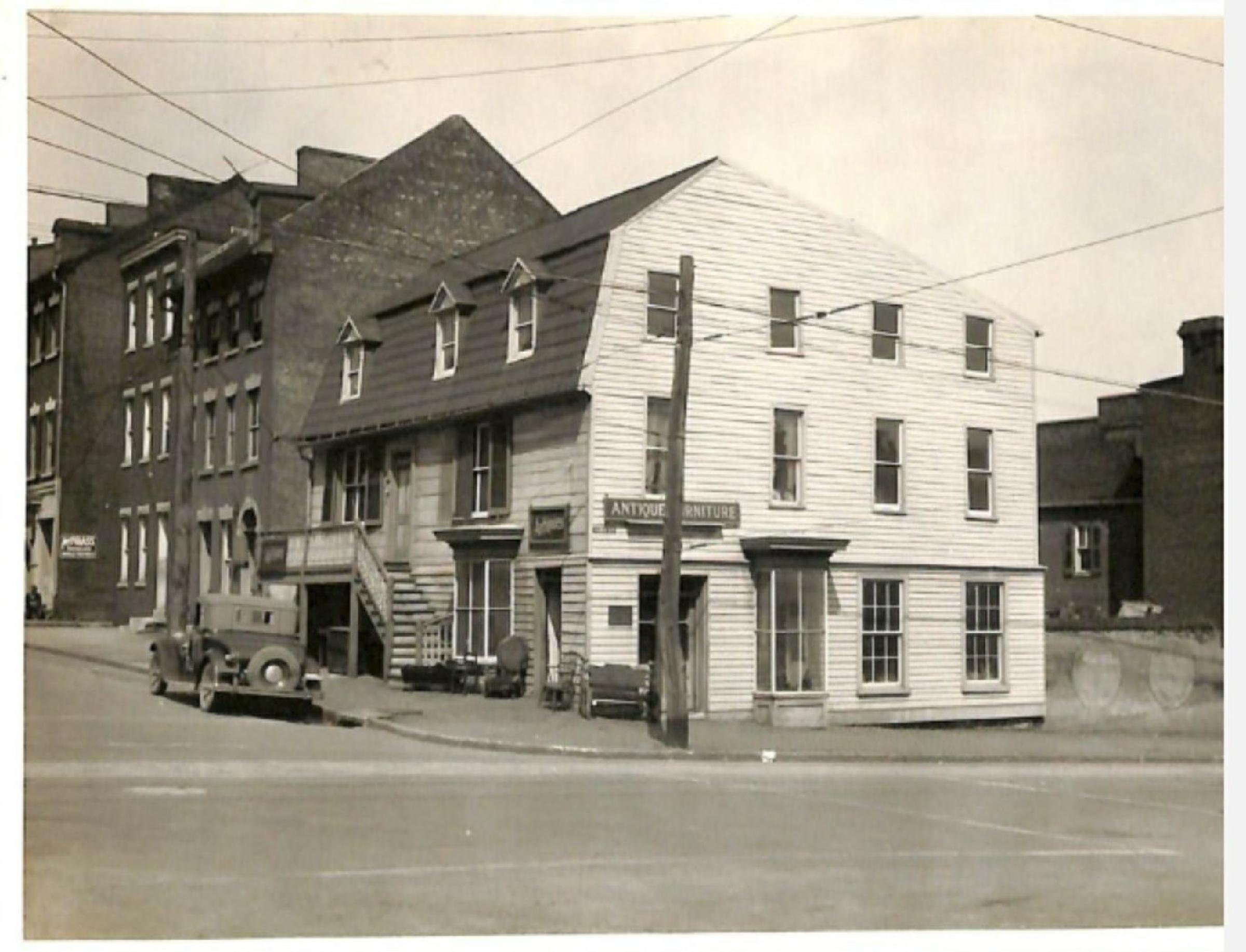
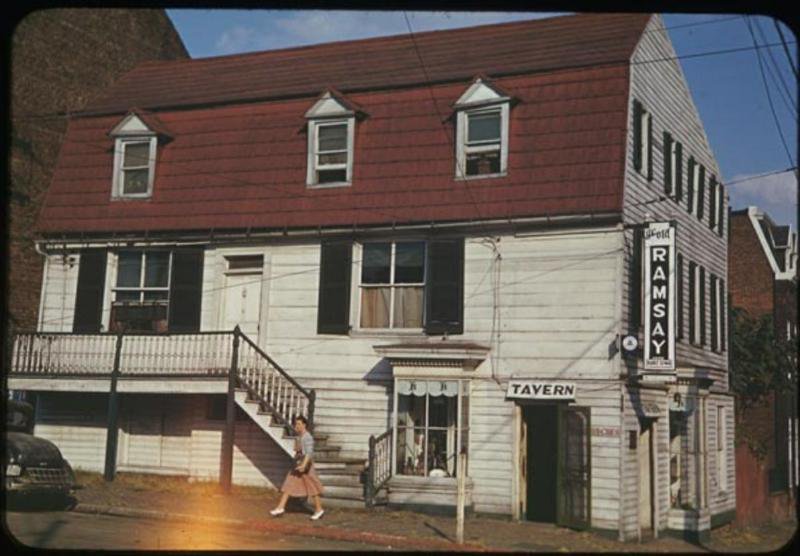
After Ramsay’s death the house passed through multiple owners and was extensively altered. Through the late nineteenth and early twentieth centuries the ground floor served a succession of commercial tenants — antique stores, small shops, and by 1940 an actual neighborhood bar called the Old Ramsay Tavern, its vertical “RAMSAY” sign and small TAVERN placard visible in Kodachromes from the period.
The 1942 fire and the 1956 reconstruction
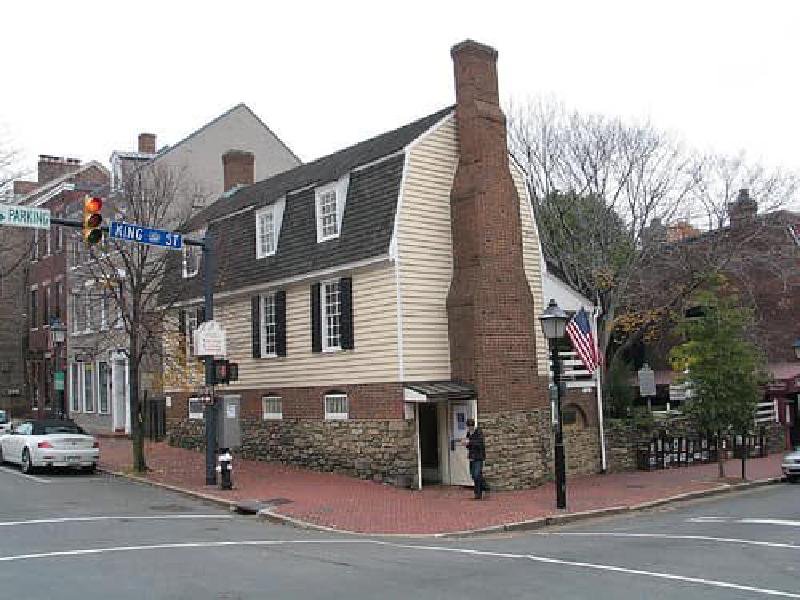
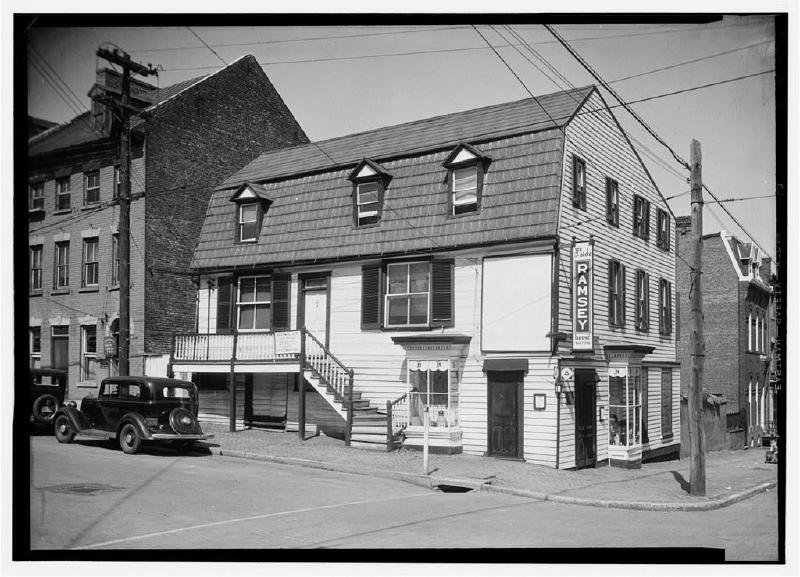
A fire in 1942 gutted much of the historic frame fabric. The building stood damaged through the 1940s and into the 1950s. In 1956, the City of Alexandria commissioned a Williamsburg-styled reconstruction by a city-hired architect. The reconstructed building used the original footprint and salvaged what materials remained, but the version you see today — gambrel roof, dormers, prominent brick chimney, stone retaining wall — is largely a mid-century recreation interpreting an earlier colonial appearance, not surviving colonial fabric. The Library of Congress’s HABS documentation (Survey VA-188) preserves the pre-fire building’s appearance for the record.
Since the late 1950s the building has served as Alexandria’s official Visitor Center.
Timeline
9 chronological entries across 2 eras.
Original Ramsay House built in Dumfries, Virginia (by tradition) [1] Source HABS Alexandria survey
- –
John Alexander's family, whose land patent underlay the town itself, are documented as associates of Ramsay during the town's first decade. [2] Source Powell, History of Old Alexandria, 1928
- –
William Ramsay owned and occupied the house from the town's founding until his death. [3] Source Miller, Artisans and Merchants, 1991
Construction of the Ramsay House [1] Source HABS Alexandria survey
House barged up the Potomac and reassembled at King + Fairfax (by tradition) [1] Source HABS Alexandria survey
- –
Ramsay conducted his merchant business from the Fairfax Street corner. [3] Source Miller, Artisans and Merchants, 1991
The building
- Vernacular gambrel-roof frame (1956 Williamsburg-styled reconstruction)
Gallery
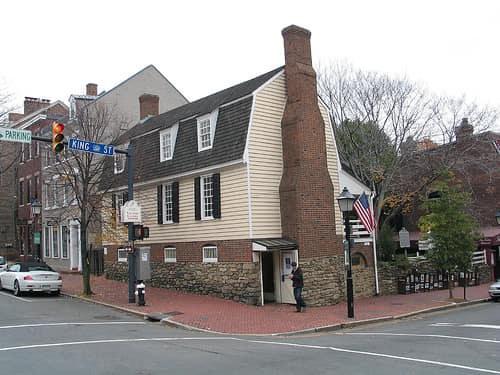
The Ramsay House today as the Alexandria Visitor Center — the 1956 Williamsburg-styled reconstruction by the city-hired architect after the 1942 fire gutted the historic building. The brick chimney and gambrel roof are deliberate echoes of the pre-fire colonial structure. Ramsay House (Alexandria Visitor Center) in modern use (fair use; original photographer undetermined) 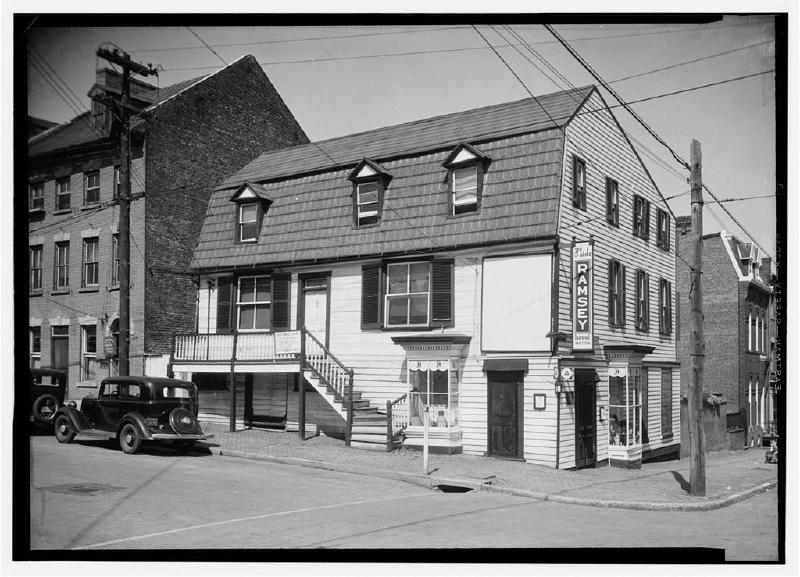
Library of Congress HABS reference photograph of the Ramsay House, c. 1930s — the canonical pre-fire architectural documentation of the 221 King Street building. Historic American Buildings Survey, VA-188, Library of Congress (public domain — federal government work) 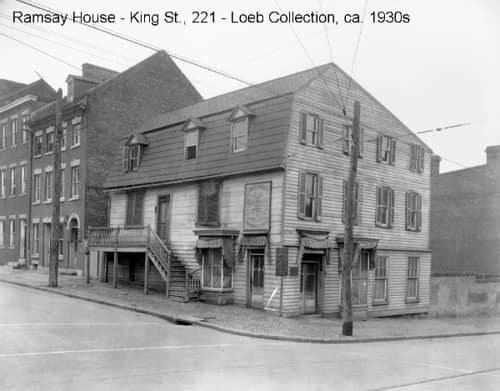
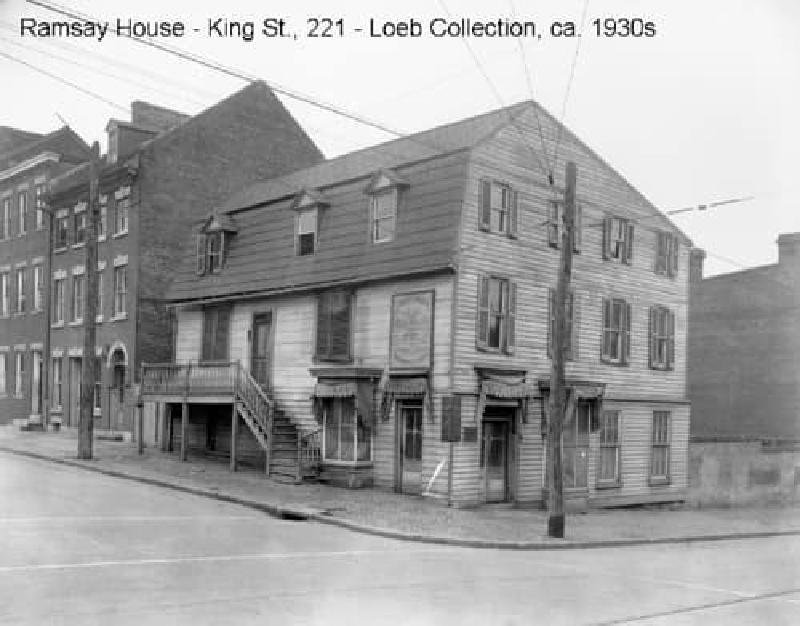
Ramsay House c. 1930s — the building's commercial-era appearance with storefronts and awnings on the ground floor, before the 1942 fire and the 1956 Williamsburg-styled reconstruction (Loeb Collection). Ramsay House — Loeb Collection, c. 1930s (public domain by age) 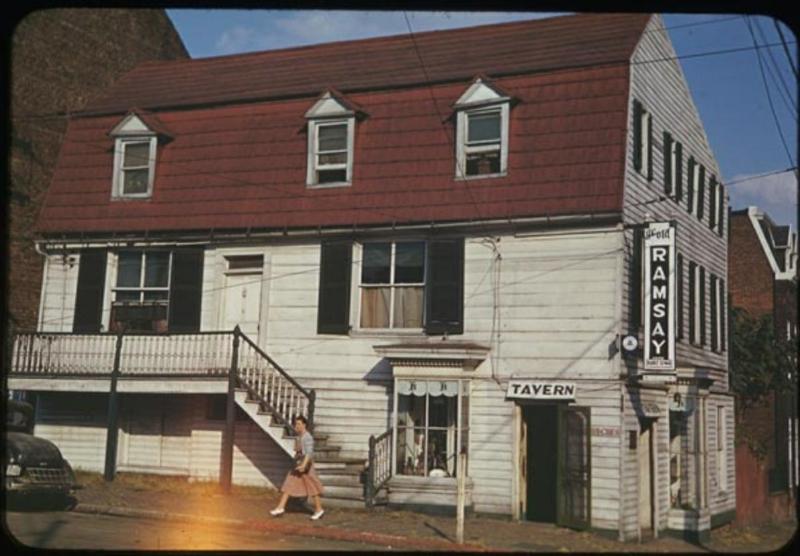
Ramsay House c. 1935-1942 — operating as an antiques store, a typical mid-20th-century commercial use of the deteriorating colonial fabric before the 1942 fire. Ramsay House in commercial use, c. 1930s-40s (public domain by age)
Connected
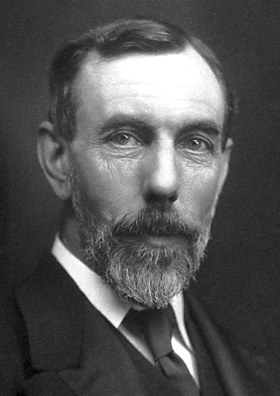
William Ramsay
b. 1716 · d. 1785
Scottish-born merchant, one of the original trustees of Alexandria in 1749, and by local tradition the town's first postmaster and first lord mayor. His frame house on King Street …
Owner · Residence · %!d(float64=1749)–%!d(float64=1785)
John Alexander
b. 1711 · d. 1764
Great-grandson of , the immigrant patriarch who in 1669 bought the 6,000-acre Howson tract on which the city of Alexandria was later platted. The John Alexander who held the …
Visitor notable · Residence · %!d(float64=1749)–%!d(float64=1764)
Nearby in time
1200 Duke Street 1200 Duke Street
Headquarters of T. J. Fannon & Sons at 1200 Duke Street, the Alexandria heating-fuel firm founded by Thomas J. Fannon as a wood-and-coal …
530 South St. Asaph Street 530 South St. Asaph Street
Continuously operating school site on South St. Asaph Street whose institutional lineage runs from the city's segregated Black schools of …
South Richmond Highway South Richmond Highway
Mid-rise commercial office building on South Richmond Highway (Alexandria's Route 1 corridor), owned/operated by the . Established by 1971 …
816 Vicar Lane 816 Vicar Lane
Cul-de-sac suburban house off Quaker Lane that was the residence of from his 1970 NASA retirement until his death at Alexandria Hospital on …
Nearby in space
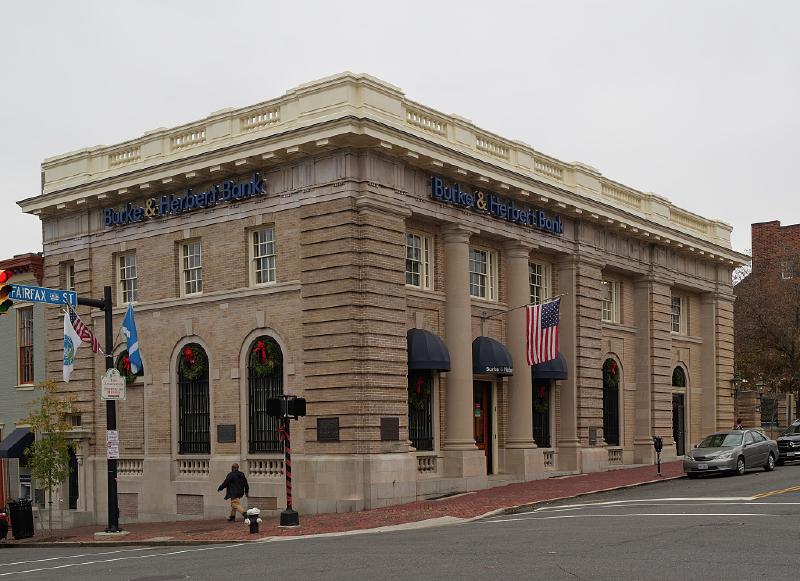
The Burke & Herbert Bank building in Alexandria, Virginia, a city immediately south of Washington, D.C., and once a larger, more thriving river port than the nation's capital city · Library of Congress, Prints & Photographs Division · http://www.loc.gov/item/2020724810/ 100 South Fairfax Street
The 1903 neoclassical home of at the corner of King and South Fairfax streets, the bank's sixth and final headquarters after a half-century …
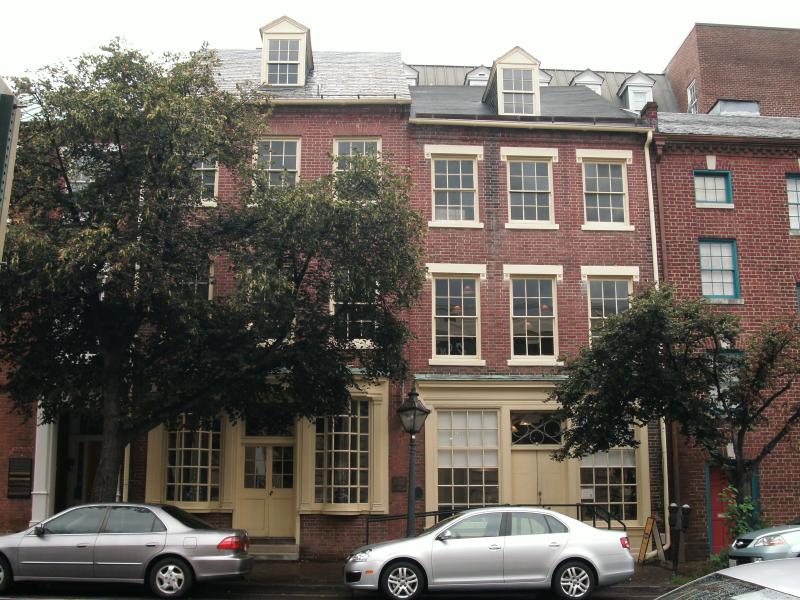
The original uploader was Ser Amantio di Nicolao at English Wikipedia . · via Wikimedia Commons · CC BY 3.0 105 South Fairfax Street
Apothecary operated 1792-1933 by the Stabler and Leadbeater families; designated a National Historic Landmark in 2021. NRHP-listed 1982.
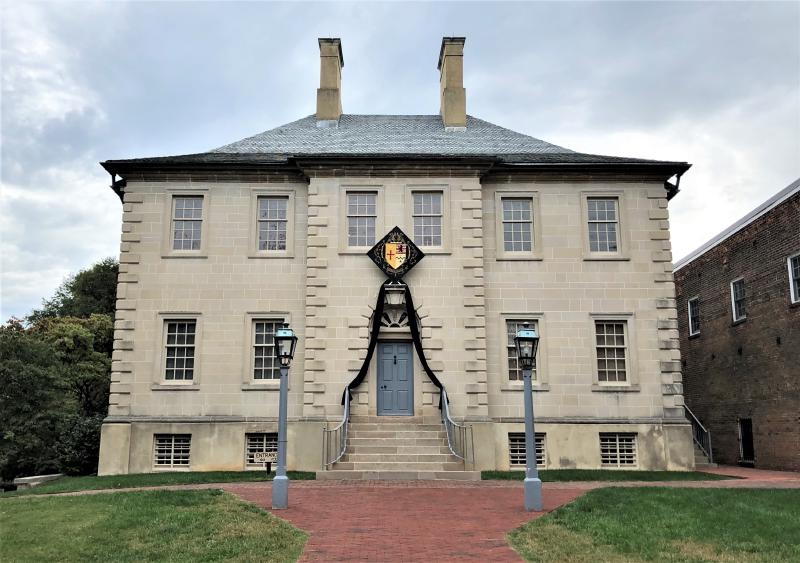
Beyond My Ken · via Wikimedia Commons · CC BY-SA 4.0 121 North Fairfax Street
Stone Georgian mansion built in 1753 by Scottish merchant John Carlyle; headquarters in April 1755 for General Edward Braddock's Congress of …
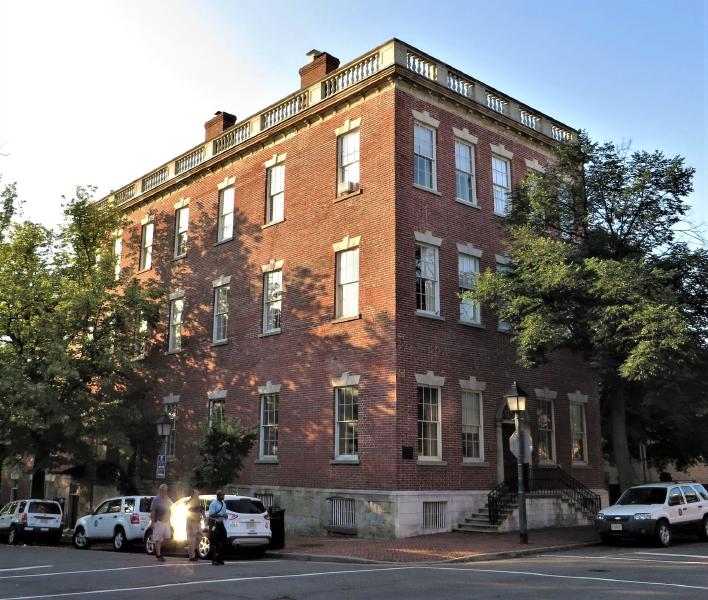
The 1807 Bank of Alexandria building at 133 N. Fairfax Street, Old Town Alexandria — the surviving Federal-style banking house after the late-1960s demolition of the Civil War-era hotel expansion. Photographed June 2014. Bank of Alexandria photographed by Ken Lund / Flickr, CC BY-SA 2.0 (2014) 133 North Fairfax Street
Federal-style 1807 banking house at the corner of North Fairfax and Cameron Streets — the surviving home of the Bank of Alexandria, …
Now
No current occupant on file. Are you, or someone you know, the present occupant? Claim this place to add operating hours, a current photo, and a short note.
King Street
Named for King George II of Great Britain (reigning 1727-1760), c. 1749.
Interpretive signs nearby
The City of Alexandria has installed 13 historical interpretive signs within walking distance of this place. Each link below opens the sign's page on this site, with the full image and trail context.
221 King St
Stabler-Leadbeater Apothecary Museum
218 King St
The Lynching of Benjamin Thomas
300 King St
121 N. Fairfax Street
207 King St
132 King St
Market Square
326 King St
311 Cameron St
100 block N. Lee Street at Cameron
411 King St
Restored Government of Virginia
125 N Royal St
Sources
- 1.
Historic American Buildings Survey, Alexandria, Virginia records, National Park Service / Library of Congress.
Government record
- 2.
Library of Congress, Historic American Buildings Survey VA-188 — William Ramsay House, 221 King Street, Alexandria, Independent City, Virginia. Photographic documentation preserving the pre-1942 appearance of the historic frame building. Public domain as a federal government work.
Government record https://www.loc.gov/pictures/resource/hhh.va0188.photos.164516p/ →
- 3.
T. Michael Miller, Artisans and Merchants of Alexandria, Virginia 1780-1820, Heritage Books, 1991.
Book
See something wrong?
Every correction is logged dated to this page. Family history, old photographs, or a citation we missed — everything goes into the file.