The myth and the miracle
Phillips Brooks, Aspinwall Hall, and the real story behind 'O Little Town of Bethlehem'
A persistent Quaker Lane legend places the writing of the Christmas carol in the Aspinwall Hall tower at the Virginia Theological Seminary. The actual story sits in 1865, on a horseback ride from Jerusalem to Bethlehem — and in 1868, in a Philadelphia rectory.
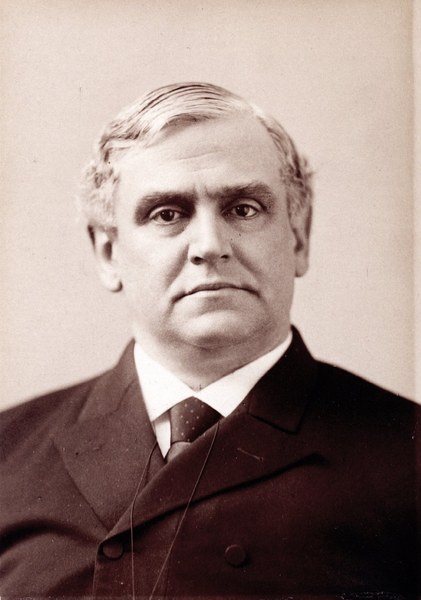
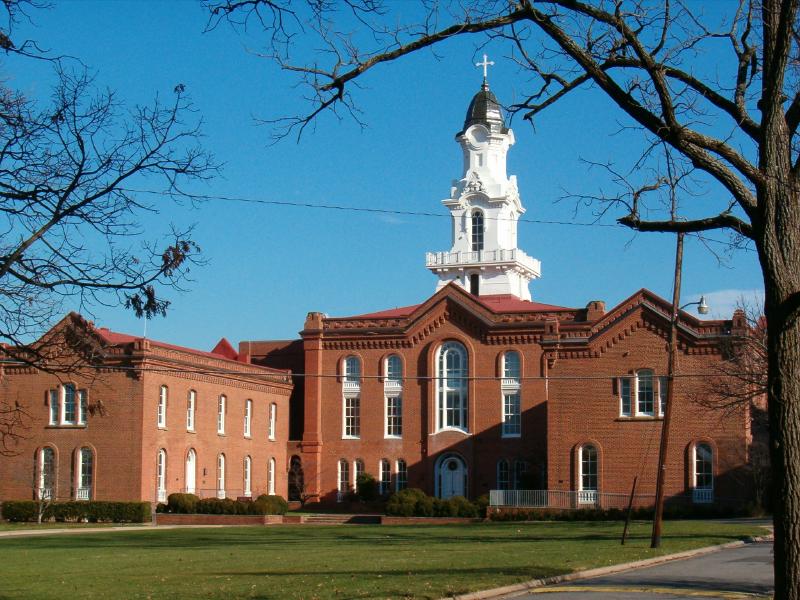
For generations a charming piece of Alexandria folklore has echoed through the streets around Quaker Lane. The legend claims that Phillips Brooks Phillips Brooks b. 1835 · d. 1893 Episcopal Bishop of Massachusetts (1891–93), preacher of national reputation, and lyricist of the Christmas carol "O Little Town of Bethlehem" (1868). 1859 graduate of the . — a young 3737 Seminary Road 3737 Seminary Road Episcopal theological seminary founded in Alexandria in 1823 and relocated to its present hilltop campus in 1827. Occupied by Union forces during the Civil War and used as a … seminarian, Class of 1859 — was standing in the iconic tower of Aspinwall Hall on a snowy winter night, looking out across the quiet Quaker Lane fields, and was so struck by the peace of the view that the lyric of “O Little Town of Bethlehem” arrived to him there on the spot.
It is a beautiful image. It is also entirely fabricated.
The Aspinwall coincidence is at least real on its surface: the central Gothic Revival hall with its iconic bell-tower was indeed completed in 1859, the same year Brooks graduated. The tower exists; Brooks’s last view of the seminary as a student would have included it; the snowy view down Quaker Lane is, on the right December evening, undeniably evocative.
But the actual writing of the carol happened thousands of miles away, in a different country, in a different decade.
The Holy-Land Christmas Eve, 1865
Brooks left VTS in 1859 and was ordained deacon that summer. After two short years at the Church of the Advent in Philadelphia, he became rector of the Church of the Holy Trinity in the same city in 1862. The Civil War years pressed heavily on his pastoral work; by the close of 1865, the war over and Lincoln assassinated eight months earlier, Brooks departed on a long-planned pilgrimage to the Holy Land.
On Christmas Eve 1865, he rode horseback from Jerusalem to Bethlehem and attended the midnight service at the ancient Church of the Nativity. The starlit ride down through the Judean hills and the deep stillness of the small hill-town stayed with him as a single continuous impression: the dark streets, the shepherds’ fields, the unhurried devotion of the midnight liturgy.
The Philadelphia rectory, December 1868
Three Christmases later — December 1868, back in Philadelphia at Holy Trinity — Brooks was preparing the Sunday-school children’s choir for their Christmas service. He wanted a fresh hymn rather than the standard Victorian repertoire. Sitting at his desk, he finally translated the 1865 Bethlehem ride into verse: five stanzas, the opening line “O little town of Bethlehem, how still we see thee lie.”
He gave the lyric to his church organist Lewis Henry Redner, who reportedly took it home, put it aside, and woke in the small hours of the night before the choir’s Sunday-school debut with the melody whole in his head — the tune now known as “St. Louis” after Redner’s first name. Redner set down the melody at his desk that night and the children sang the carol the following morning.
What the Aspinwall myth gets wrong — and what it gets right
The Quaker Lane folklore folds together two adjacent truths (Brooks’s VTS attendance and Aspinwall’s 1859 completion) and implies a third, false, claim (that the carol was written there). The lyric was written in 1868, in Philadelphia, three years after the Bethlehem ride that inspired it.
But the seminary’s claim on Phillips Brooks is real. He was shaped as a clergyman, preacher, and reader of nineteenth-century theology at VTS. The deep evangelical and devotional tradition of the seminary’s mid-century curriculum is part of what equipped a young Brooks to recognize what he was experiencing on a Judean hillside on Christmas Eve 1865 — and to translate it into the most-sung American Christmas carol three years later.
The myth, in other words, accurately points at a real connection; it just gets the geography of the writing-desk wrong by an entire hemisphere.
On the ground
Dramatis personae
Phillips Brooks
b. 1835 · d. 1893
Episcopal Bishop of Massachusetts (1891–93), preacher of national reputation, and lyricist of the Christmas carol "O Little Town of Bethlehem" (1868). 1859 graduate of the .