
The Fortified Ring
Alexandria inside the Defenses of Washington
For four years Alexandria sat inside the largest continuous defensive perimeter in North America. The city the Union built inside its own forts shaped what would come after.
On the morning of May 24, 1861, five weeks after Fort Sumter, Union forces crossed the Long Bridge and the Aqueduct Bridge from Washington and occupied Alexandria. By nightfall the mayor had surrendered; within a week Union engineers were laying out the earthworks that would grow into 4301 West Braddock Road 4301 West Braddock Road Earthwork fort raised in 1861 as part of the ring of Union fortifications around Washington; the fifth-largest of the Civil War defenses of the capital. After the war the fort's … and the sixty-seven other enclosed forts of the Defenses of Washington.
Alexandria would remain under federal occupation for the rest of the war. The city had been a slave-trading center ( 1315 Duke Street 1315 Duke Street Federal-style brick house at 1315 Duke Street built in the 1810s by Brigadier General Robert Young of the DC Militia; from 1828 to 1837 the headquarters of Franklin & Armfield, the … ), a merchant port, and a southern county seat. It would now become a logistical hub: a Union rear area, a military hospital city, and, for thousands of people escaping slavery in northern Virginia, the first Union-held ground they could reach on foot [1] NARA Civil War records Government record .
The outer line
The sixty-eight enclosed forts that came to ring Washington were connected by batteries, rifle trenches, and military roads. On the Virginia side the line began at Arlington and curved south and west through what is now Falls Church, Bailey’s Crossroads, and the high ground west of Alexandria. Fort Ward was among the larger of the Virginia works, its thirty-six gun positions commanding the Leesburg Turnpike. A short distance east, the hilltop campus of 3737 Seminary Road 3737 Seminary Road Episcopal theological seminary founded in Alexandria in 1823 and relocated to its present hilltop campus in 1827. Occupied by Union forces during the Civil War and used as a … — itself requisitioned by federal authorities as a hospital — served as a rear area for the forts on Seminary Hill [2] HABS Alexandria survey Government record .
The forts never saw serious combat. Confederate forces never seriously contested the outer line of the Defenses of Washington after 1861. What the forts did instead was hold the ground — and that changed what was possible on the ground they held.
The people who came to the forts
Almost as soon as federal forces took up position around Alexandria, people escaping enslavement began arriving. Some came singly; others arrived in family groups; a few arrived driving wagons. Union authorities, after some hesitation, treated them as “contrabands of war” — not, in the formal federal framing, as free people, but also not as property to be returned to the farms they had fled. Camps sprang up at Shuter’s Hill, behind the fortifications, and around Fort Ward itself [1] NARA Civil War records Government record .
The collective entity page for this community — Freedmen of the Contrabands Camp Freedmen of the Contrabands Camp founded 1861 Collective entity representing the several thousand formerly enslaved people who fled to Union-occupied Alexandria during the Civil War, settling in camps at Shuter's Hill, around … — exists because the story of occupied Alexandria is not legible without it. The same ground that held Union guns held, shortly afterwards, the first free settlements of many of the people who had built the plantations the guns had been trained on.
L’Ouverture
In February 1864 the Union Army opened 219 South Payne Street 219 South Payne Street Union Army hospital established in February 1864 for U.S. Colored Troops and Black civilian refugees in occupied Alexandria. Named for Toussaint Louverture, the Haitian … at South Payne and Prince streets, a purpose-built hospital for U.S. Colored Troops and Black civilian refugees. Named for Toussaint Louverture, the Haitian revolutionary, the hospital was one of the first federal medical facilities in the country explicitly dedicated to the care of Black patients.
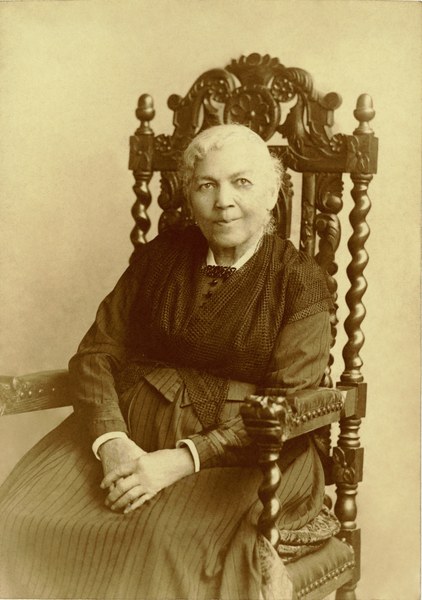
The writer and abolitionist Harriet Jacobs Harriet Jacobs b. 1813 · d. 1897 Formerly enslaved author of Incidents in the Life of a Slave Girl (1861) who, with her daughter Louisa, worked among formerly enslaved people living in and around Union-occupied … , whose Incidents in the Life of a Slave Girl had been published three years earlier, was in Alexandria with her daughter Louisa during much of this period. They distributed clothing, opened schools for Black children, and reported conditions in the contraband camps and hospitals to the northern abolitionist press [3] LOC Prints & Photographs Photograph . Jacobs’s dispatches from Alexandria are among the fullest contemporary accounts of Black life in the occupied city.
In December 1864 wounded soldiers at L’Ouverture signed a petition protesting the Army’s practice of burying Black dead in the segregated Freedmen’s Cemetery while white Union dead went into the new national cemetery at Wilkes Street. The petition was granted. Black soldiers who had died in the hospitals of Alexandria were reinterred in 1450 Wilkes Street 1450 Wilkes Street One of the original fourteen national cemeteries established in 1862, interring Union dead from the Civil War, including United States Colored Troops reinterred from L'Ouverture … in 1865 and 1866 [4] Pippenger, Alexandria Death Records Book .
What the ring held
By the time the earthworks at Fort Ward were dismantled in 1865, the city that the Union had occupied in 1861 had become a different place. The forts had held their line; they had held, also, the space inside which thousands of people had, for the first time, become legally free. The community that formed on and around the old Fort Ward grounds after the war persisted into the twentieth century as an identifiable African American neighborhood — “The Fort” — before it was displaced in the 1960s by cemetery expansion and park development.
The fortified ring kept Washington safe. It did something larger, and less often remembered, for the people who walked into it from the countryside it enclosed.
On the ground
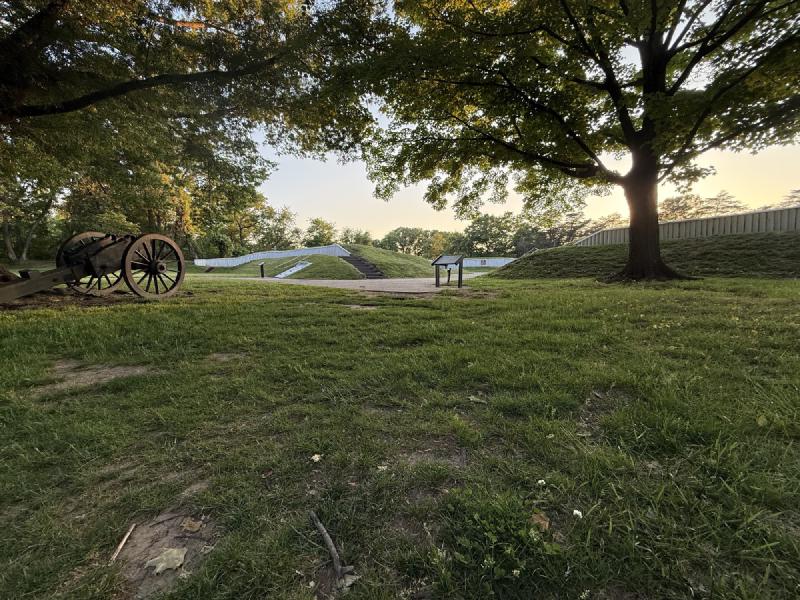
Restored Fort Ward earthwork, Seminary Hill, Alexandria — May 9, 2026. © KingSt.com, May 2026 site visit 4301 West Braddock Road
Earthwork fort raised in 1861 as part of the ring of Union fortifications around Washington; the fifth-largest of the Civil War defenses of …
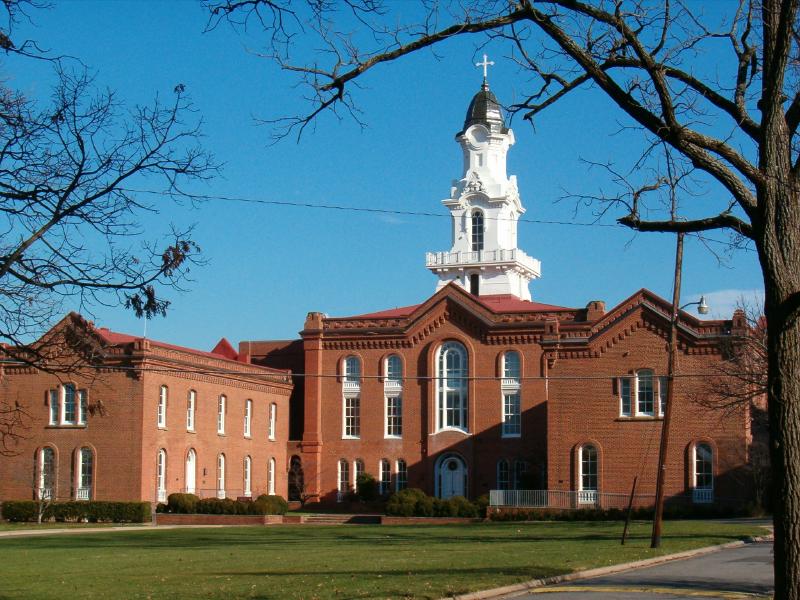
John W. Cross · via Wikimedia Commons · CC BY 2.5 3737 Seminary Road
Episcopal theological seminary founded in Alexandria in 1823 and relocated to its present hilltop campus in 1827. Occupied by Union forces …
Placeholder illustration of Louverture Hospital Site. Seed placeholder — KingSt.com, 2026. To be replaced with archival photograph. 219 South Payne Street
Union Army hospital established in February 1864 for U.S. Colored Troops and Black civilian refugees in occupied Alexandria. Named for …
Placeholder illustration of Alexandria National Cemetery. Seed placeholder — KingSt.com, 2026. To be replaced with archival photograph. 1450 Wilkes Street
One of the original fourteen national cemeteries established in 1862, interring Union dead from the Civil War, including United States …
Dramatis personae
Harriet Jacobs
b. 1813 · d. 1897
Formerly enslaved author of Incidents in the Life of a Slave Girl (1861) who, with her daughter Louisa, worked among formerly enslaved people living in and around Union-occupied …
Freedmen of the Contrabands Camp
founded 1861
Collective entity representing the several thousand formerly enslaved people who fled to Union-occupied Alexandria during the Civil War, settling in camps at Shuter's Hill, around …
Sources
- 1.
National Archives and Records Administration, Union Provost Marshal records and Civil War-era military correspondence (RG 109, RG 110, RG 393).
Government record
- 2.
Historic American Buildings Survey, Alexandria, Virginia records, National Park Service / Library of Congress.
Government record
- 3.
Library of Congress, Prints & Photographs Online Catalog (Washington: Library of Congress).
Photograph
- 4.
Wesley E. Pippenger, Alexandria, Virginia Death Records, 1863-1896, Heritage Books.
Book