
The Parkway Was a Plan
George Washington's River Farm, the Memorial Parkway, and a Roy Rogers by the Potomac
The scenic river road from Mount Vernon to Memorial Bridge was a 20th-century political project, authorized in 1928 and threaded through the old Washington farms. The landscape it ran through was never really an accident.
If you drive south from Arlington along the George Washington Memorial Parkway toward 3200 Mount Vernon Memorial Highway 3200 Mount Vernon Memorial Highway Five-farm plantation on the Potomac owned by George Washington from 1761 until his death in 1799; home to Washington, his family, and more than three hundred enslaved people. … , the road narrows below Alexandria and threads through a series of open vistas: the Potomac at Dyke Marsh, the woods at Fort Hunt, the open lawns at River Farm, the bluff above Mount Vernon. The landscape reads as somewhere between a national park and a piece of very well-preserved Virginia countryside. It is neither.
The parkway was authorized by Congress in 1928, in the run-up to the 1932 bicentennial of Washington’s birth, and constructed through the 1930s as a federal public-works project [1] Alexandria Library Special Collections Manuscript . Its route was chosen and its views composed by landscape architects working for the National Park Service and the Bureau of Public Roads. The parkway’s design brief was not preservation but composition: it assembled a drive that would look like the landscape George Washington had known, by acquiring — and, in places, altering — the ground it ran through.
River Farm
Among the parcels the parkway’s designers acquired and reshaped was the former River Farm tract, one of the five constituent farms of George Washington George Washington b. 1732 · d. 1799 Planter, military commander, and first President of the United States. Master of Mount Vernon from 1761 until his death in 1799, and a regular presence in Alexandria, which he … ’s Mount Vernon plantation. Washington acquired River Farm in 1760; the land was worked by enslaved people, including for some period West Ford West Ford b. 1784 · d. 1863 Man born enslaved on the estate of Bushrod Washington and later freed; a longtime manager at Mount Vernon whose descendants maintain an oral tradition of descent from the … , until his death in 1799 [2] Powell, History of Old Alexandria, 1928 Book . After 1799 it passed through a succession of private owners. By the early twentieth century the old farm had been subdivided, partly reforested, partly reused for other agricultural purposes.
The American Horticultural Society acquired what remained of the main residence and 27 surrounding acres in 1973 and opened it as a public garden. Most of the larger historical River Farm, however, had already been redeveloped for other uses: for federal parkland, for a sewage treatment plant, and — beginning around 1949 — for the 1500 Belle View Boulevard 1500 Belle View Boulevard Mid-century shopping center on the former River Farm tract, one of the five constituent farms of George Washington's Mount Vernon plantation. Juxtaposes a Washington-era … and the Belle View Apartments, a postwar suburban development.
The shopping center
Belle View Shopping Center sits on low ground at the edge of the parkway. Its architecture is modest and utilitarian: a Safeway anchor, a row of smaller storefronts, parking facing the road. A typical mid-century strip center of its period. At various points in its life the center has contained a Roy Rogers fast-food restaurant, a People’s Drug, a Chinese restaurant, a dry cleaner, a hardware store, a bicycle shop, a pet supply store [1] Alexandria Library Special Collections Manuscript . None of this is remarkable.
What is remarkable is the ground. The Belle View parking lot sits roughly on the line of one of Washington’s River Farm fields. Drive half a mile north on the parkway and the designed eighteenth-century landscape resumes: a tree-lined roadway, a river view, a sense that one has stepped into a restored Washington-era vista. Drive back south to the shopping center and the sense collapses. The landscape on both sides of that half-mile was worked by the same hands and owned by the same owner.
What the plan was
The George Washington Memorial Parkway as built in the 1930s was a plan: a piece of public infrastructure designed to produce a particular experience of American history for the citizens who would drive on it. The plan was ambitious, sustained, and, in many respects, successful. The parkway is beautifully composed. It is also selective. The Washington-era ground it runs through was farmed by enslaved people, sold by his heirs, parceled off to speculators, partly reassembled by the federal government, and partly sold off to private developers. The parkway shows some of that and hides some of it. The shopping center sits in the gap.
The juxtaposition — an eighteenth-century president’s plantation farm, a 1930s federal landscape project, a 1949 suburban shopping center — is not a mistake. It is three successive generations’ answers to the question of what to do with a piece of the Virginia landscape that began in bondage and ended at a strip mall. The parkway was a plan; the shopping center was a plan; what isn’t visible on either side of the road is that River Farm itself was a plan.
None of the three plans is the whole story of the place. The accumulated evidence of the three is.
On the ground
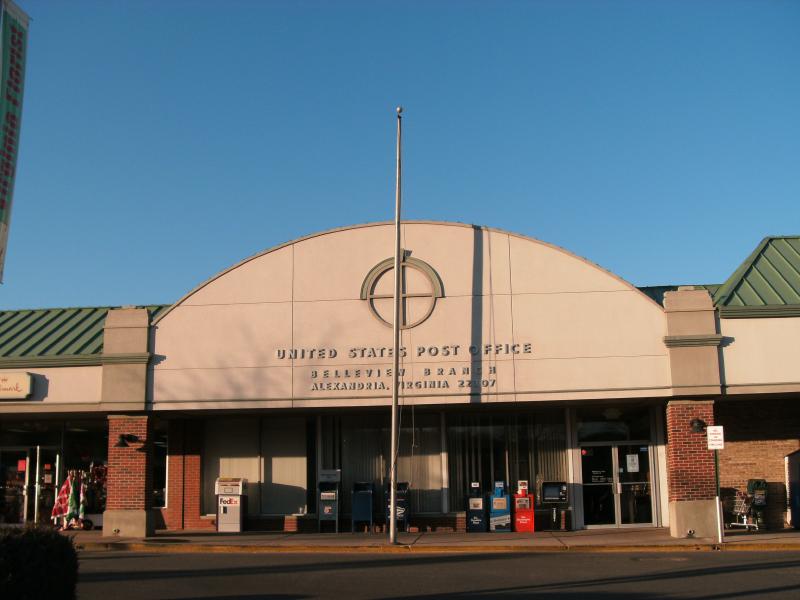
User:AlbertHerring · via Wikimedia Commons · CC BY 3.0 1500 Belle View Boulevard
Mid-century shopping center on the former River Farm tract, one of the five constituent farms of George Washington's Mount Vernon …
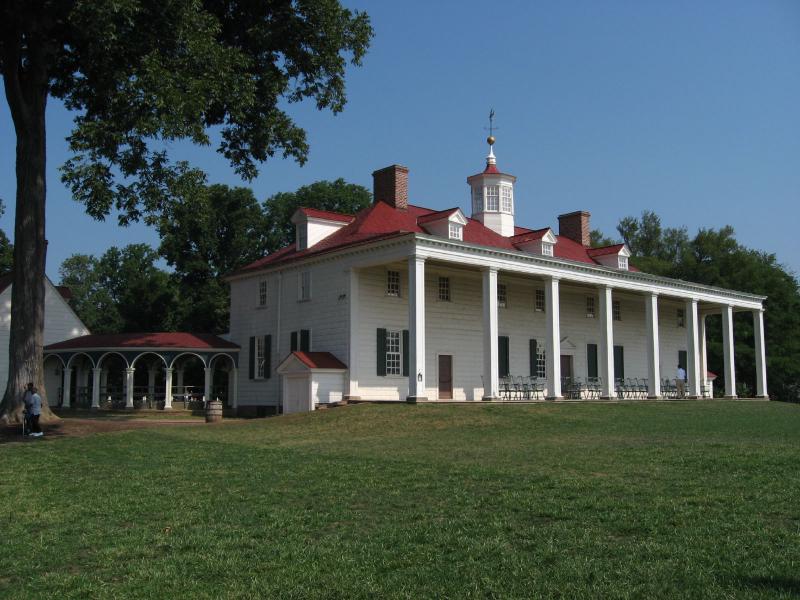
Ken Lund from Reno, Nevada, USA · via Wikimedia Commons · CC BY-SA 2.0 3200 Mount Vernon Memorial Highway
Five-farm plantation on the Potomac owned by George Washington from 1761 until his death in 1799; home to Washington, his family, and more …
Dramatis personae
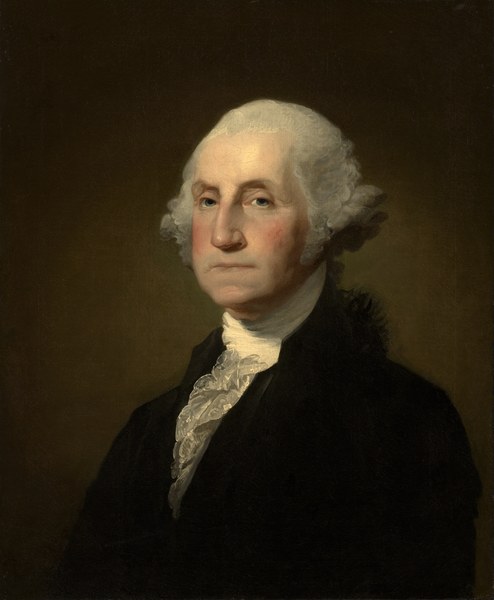
George Washington
b. 1732 · d. 1799
Planter, military commander, and first President of the United States. Master of Mount Vernon from 1761 until his death in 1799, and a regular presence in Alexandria, which he …
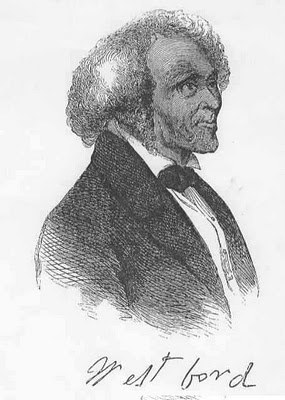
West Ford
b. 1784 · d. 1863
Man born enslaved on the estate of Bushrod Washington and later freed; a longtime manager at Mount Vernon whose descendants maintain an oral tradition of descent from the …
Sources
- 1.
Alexandria Library, Local History/Special Collections, Barrett Branch, Alexandria, Virginia.
Manuscript
- 2.
Mary G. Powell, The History of Old Alexandria, Virginia, from July 13, 1749 to May 24, 1861, Richmond: William Byrd Press, 1928.
Book