The architect of history
Rev. Dr. W.A.R. Goodwin, the rescue of Williamsburg, and the VTS connection
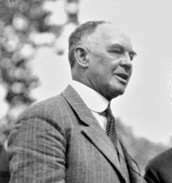
A 1893 Virginia Theological Seminary graduate and twice-rector of Bruton Parish Church, W.A.R. Goodwin spent two decades persuading John D. Rockefeller Jr. to fund what became Colonial Williamsburg — the most ambitious historic-preservation project in twentieth-century America.
The 3737 Seminary Road 3737 Seminary Road Episcopal theological seminary founded in Alexandria in 1823 and relocated to its present hilltop campus in 1827. Occupied by Union forces during the Civil War and used as a … has produced two centuries of Episcopal clergy. A handful of its alumni have left a tangible mark on the American built environment beyond the parish church — and Rev. Dr. W.A.R. Goodwin Rev. Dr. W.A.R. Goodwin b. 1869 · d. 1939 Episcopal priest and historic-preservation visionary; "father" of the Colonial Williamsburg restoration. Trained at the (Class of 1893); convinced philanthropist John D. … , Class of 1893, is widely credited as the most consequential of them. Goodwin is universally remembered as the “father” of the Colonial Williamsburg restoration, the philanthropic-historic-preservation project that translated a fading Virginia colonial capital into one of the most-visited American historical sites.
A Bruton Parish catalyst
Goodwin’s Williamsburg journey began with a single church.
He arrived in Williamsburg in 1903, age thirty-four, to take up the rectorship of Bruton Parish Church — the historic 1715 Anglican parish church at the center of the old colonial capital. By 1907 he had led the restoration of Bruton Parish Church itself to its eighteenth-century appearance: removing nineteenth-century alterations, recovering original liturgical furnishings, and re-establishing the church’s colonial-era sense of architectural propriety. It was Goodwin’s first preservation project and his proof-of-concept for what would become the larger work.
But as he walked the streets of Williamsburg between his rectory and the church, he saw the surviving 18th-century buildings of the city rapidly deteriorating — torn down for modern construction, collapsing from neglect, or quietly altered beyond recognition. He left Williamsburg in 1909 for a New York rectorship, then a Roanoke pulpit, but the city stayed with him.
The Rockefeller partnership, 1924
Goodwin returned to Bruton Parish as rector in 1923, by then fifty-four, taking up an additional appointment teaching biblical literature at the College of William & Mary. He spent 1924 building a coalition for a city-wide restoration — and recognized that the project was far too large for any local funding source.
The breakthrough came in late 1924 when Goodwin met John D. Rockefeller Jr. at a Phi Beta Kappa banquet at William & Mary. Goodwin’s persistence was the active ingredient: he sent Rockefeller a series of letters and held subsequent meetings, eventually persuading him in 1926 to fund a full-scale survey of the city’s eighteenth-century building stock — and then, by 1928, to underwrite a complete restoration program.
A two-century footprint
The Goodwin–Rockefeller partnership lasted the rest of Goodwin’s life. By the late 1920s the project had quietly bought up significant parcels in the historic core; by the 1930s the visible work was underway, with hundreds of structures restored or reconstructed to their eighteenth-century appearance. The project formally opened to the public as Colonial Williamsburg in 1934.
Goodwin died at his Williamsburg home on September 7, 1939, age seventy. The restoration he initiated has continued for nine decades and now encompasses 301 acres at the heart of Williamsburg, with more than 600 restored or reconstructed eighteenth-century buildings, drawing roughly two million visitors annually.
The VTS connection
Goodwin’s preservation work has its roots, like Bruton Parish itself, in the Anglican-Episcopal pastoral tradition — and in the specific clergy formation that the 3737 Seminary Road 3737 Seminary Road Episcopal theological seminary founded in Alexandria in 1823 and relocated to its present hilltop campus in 1827. Occupied by Union forces during the Civil War and used as a … provided in the 1890s. The seminary’s nineteenth-century curriculum emphasized both biblical literacy and the parish-as-place: the church building, its furnishings, its physical setting in the community. Goodwin’s first preservation project was a parish-church restoration, not a museum project; the city-scale Williamsburg restoration grew organically from that pastoral instinct, reading the surrounding historic-fabric as an extension of the parish’s care.
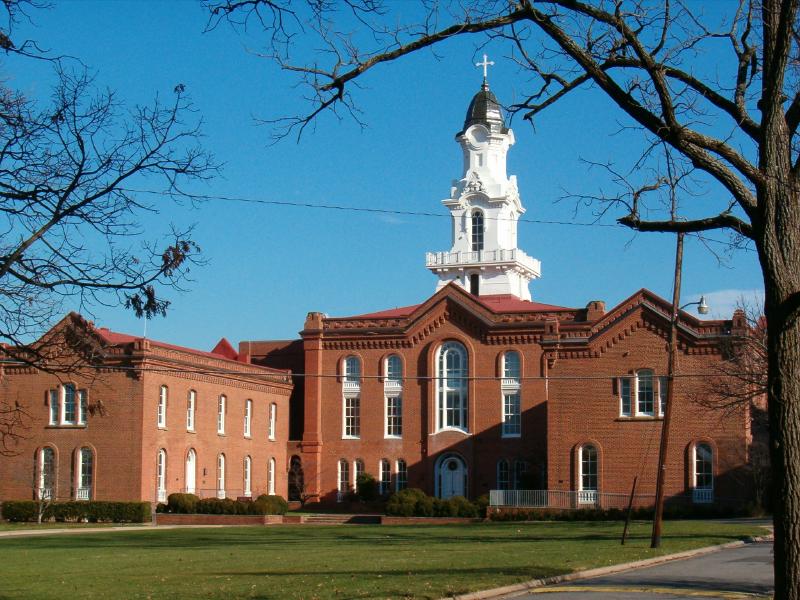
Goodwin’s legacy is permanently honored on the VTS campus and throughout Colonial Williamsburg itself — most prominently in the Goodwin Building, ensuring that the man who saved Williamsburg’s past will always be remembered in its future.
On the ground
Dramatis personae
Rev. Dr. W.A.R. Goodwin
b. 1869 · d. 1939
Episcopal priest and historic-preservation visionary; "father" of the Colonial Williamsburg restoration. Trained at the (Class of 1893); convinced philanthropist John D. …