
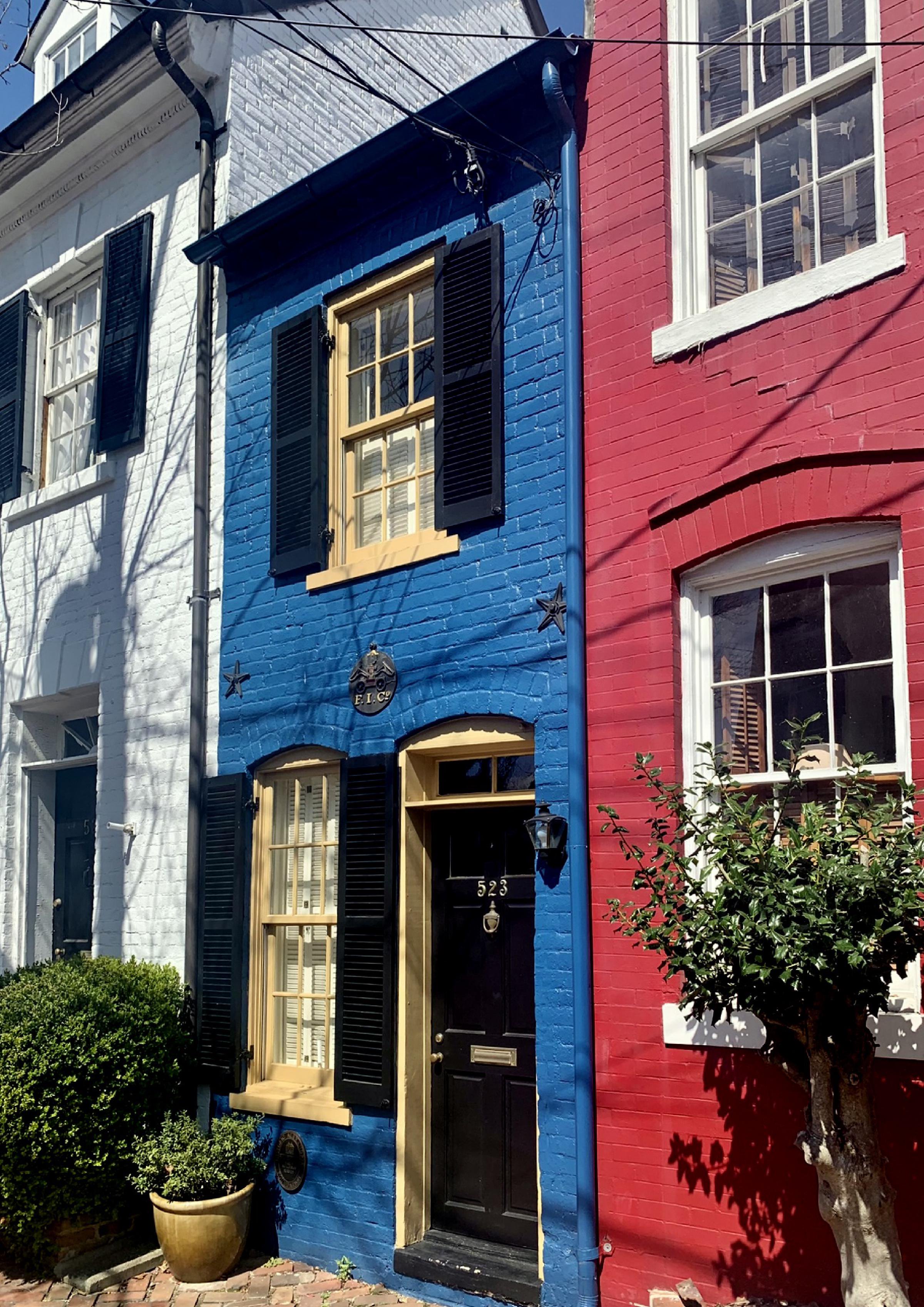
523
Queen Street
Two-story brick “spite house” 7 feet 6 inches wide, infilling the alley between 521 and 525 Queen Street. Built in 1830 by John Hollensbury John Hollensbury Alexandria brickmaker and property owner who in 1830 built the 7-foot-6-inch-wide alley infill known as the to block loiterers and wagon-wheel hubs from his adjoining Queen Street … to block alley loiterers and wagon damage to his adjacent house.
- 1830
- Federal
- Extant
- Old and Historic Alexandria District
Place narrative
By the late 1820s John Hollensbury John Hollensbury Alexandria brickmaker and property owner who in 1830 built the 7-foot-6-inch-wide alley infill known as the to block loiterers and wagon-wheel hubs from his adjoining Queen Street … owned both 525 Queen Street and the narrow alley parcel that ran between 521 and 525 Queen. The block sat in the heart of Old Town’s commercial-residential mix, two blocks north of King Street, where Federal-period brick rowhouses fronted directly onto the public sidewalk and shared party walls with their neighbors. The alley between Hollensbury’s house and the adjoining 521 Queen lot was an open passage — narrow enough to be useless for wagons but wide enough to attract foot traffic, loiterers, and the detritus of street life on a busy commercial corridor. [1] Office of Historic Alexandria walking-tour materials Website
In 1830 Hollensbury closed the alley by building across it. He erected a two-story brick infill structure spanning the entire width of the passage — a practical solution that simultaneously deterred loiterers from gathering in the gap and prevented passing wagon-wheel hubs from gouging the exterior wall of his 525 Queen Street house. Both wagon damage and alley loiterers are cited in modern accounts of Hollensbury’s motivation; whether either dominated his decision is not recoverable from the surviving record. [2] Atlas Obscura — Hollensbury Spite House Website [3] Wikipedia — Hollensbury Spite House Website
The resulting building measures 7 feet 6 inches at its widest point, rises two stories in brick, and is single-pile in plan, yielding approximately 325 square feet of floor area across the two floors. The narrow footprint accommodates a single room per floor connected by an interior stair. The front facade carries a window-and-door arrangement consistent with the surrounding 1820s–1830s brick rowhouses on Queen Street, so that from the sidewalk the Spite House reads as a continuation of the streetscape rather than as the anomalous infill it actually is. [3] Wikipedia — Hollensbury Spite House Website [1] Office of Historic Alexandria walking-tour materials Website
The house has been continuously occupied as a residence from its 1830 construction to the present day. It remains a private residence and is not open to the public. Its singular dimensions have given it a long second life in popular culture: the Spite House is reported to have appeared in Ripley’s Believe It or Not and is widely cited in Alexandria tourism guides and national listicles as one of the narrowest houses in the United States. [2] Atlas Obscura — Hollensbury Spite House Website
The Spite House is a contributing structure of the Old and Historic Alexandria District. It sits along the popular King Street walking corridor, two blocks off the main retail spine, and is one of the most-photographed buildings in Old Town — a tiny piece of early- republic urbanism that has outlived almost every functional reason for its existence and now persists as both a working private home and a fixed landmark of the historic district. [1] Office of Historic Alexandria walking-tour materials Website
Timeline
2 chronological entries across 1 era.
The building
- Federal
No images yet — contribute a photo.
Connected
John Hollensbury
Alexandria brickmaker and property owner who in 1830 built the 7-foot-6-inch-wide alley infill known as the to block loiterers and wagon-wheel hubs from his adjoining Queen Street …
Builder · Residence · %!d(float64=1830)–%!d(float64=1830)
Nearby in time
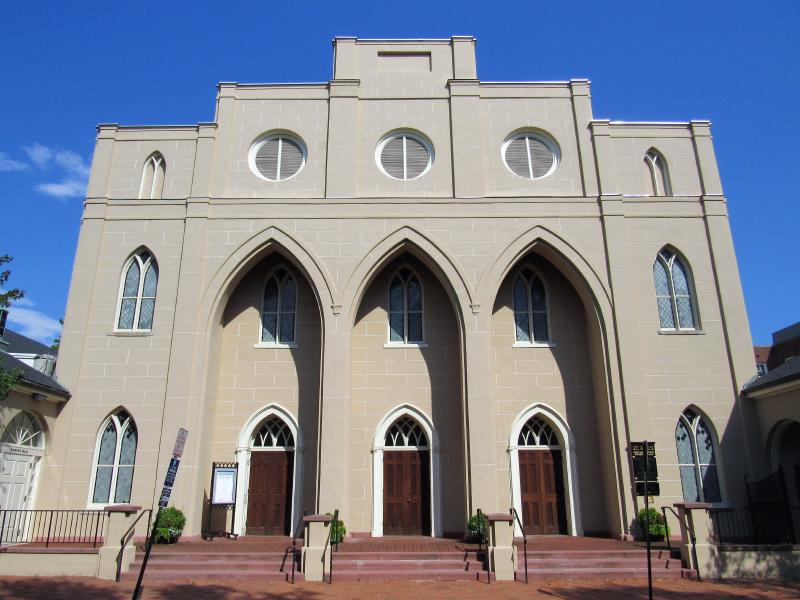
Farragutful · via Wikimedia Commons · CC BY-SA 4.0 228 South Pitt Street
Federal-Greek Revival 1817 sanctuary, the second oldest Episcopal congregation in Alexandria after Christ Church. NRHP-listed 1985.
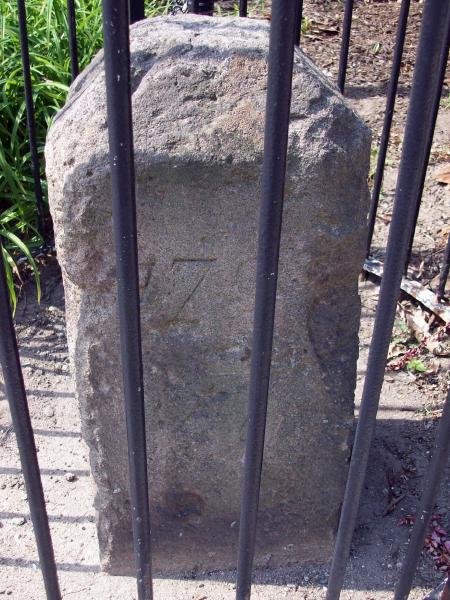
Bruce Andersen from Washington, DC · via Wikimedia Commons · CC BY-SA 2.0 7 Russell Road
Second of the original DC southwestern boundary stones, placed 1791-1792. NRHP-listed 1991.
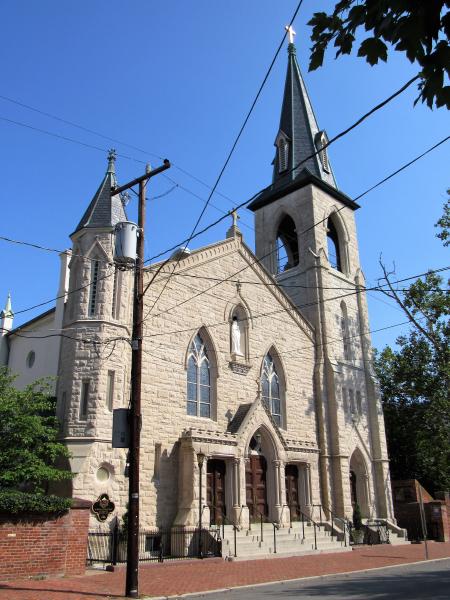
Farragutful · via Wikimedia Commons · CC BY-SA 4.0 310 South Royal Street
Founded in 1795 as the first Catholic parish in Virginia. Present Greek Revival church on South Royal Street completed 1827; congregation …
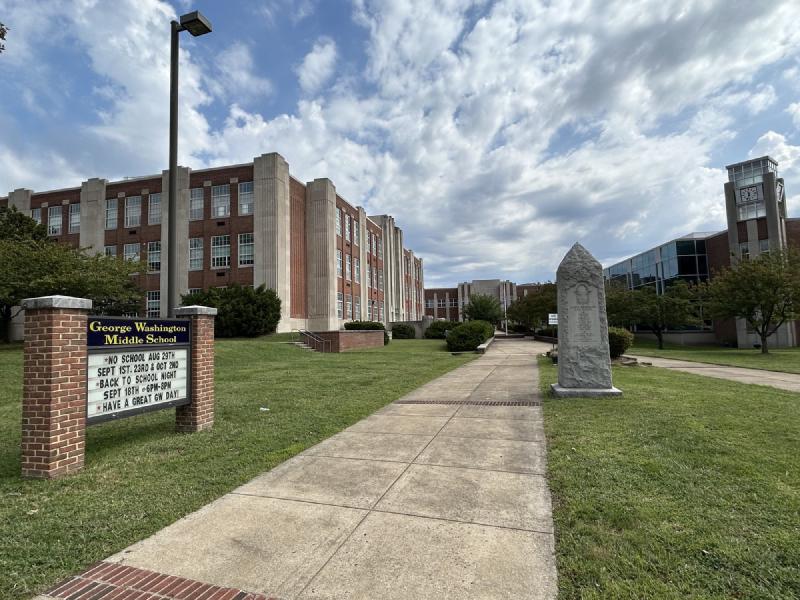
George Washington Middle School on Mount Vernon Avenue in Del Ray, looking northeast along the front walk — the 1934 Stripped Classical school building at left, the modern clock-tower addition at right, and (at right of the walk) the granite WWII memorial obelisk erected by the graduating classes of 1943-1947 to the fifty GW alumni who did not come back from the war. © KingSt.com, 2024 1005 Mount Vernon Avenue
Brick Stripped Classical / Art Deco school on Mount Vernon Avenue in Del Ray, built 1934 and opened 1935 as George Washington High School — …
Nearby in space
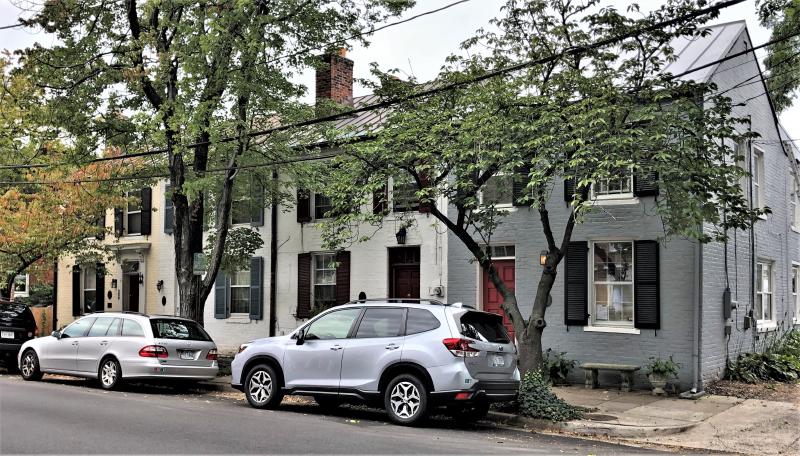
Beyond My Ken · via Wikimedia Commons · CC BY-SA 4.0 206 North Pitt Street
Three brick rowhouses built ca. 1849 by Moses Hepburn, a free Black property owner and one of antebellum Alexandria's wealthiest African …
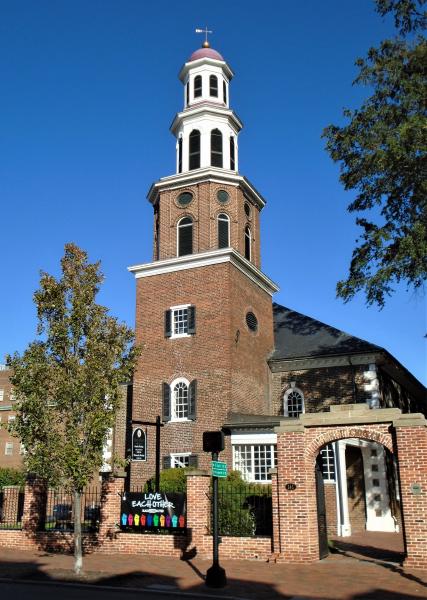
Beyond My Ken · via Wikimedia Commons · CC BY-SA 4.0 118 North Washington Street
Alexandria's Georgian-style Episcopal parish church, consecrated in 1773; pew owners included George Washington and, decades later, the Lee …
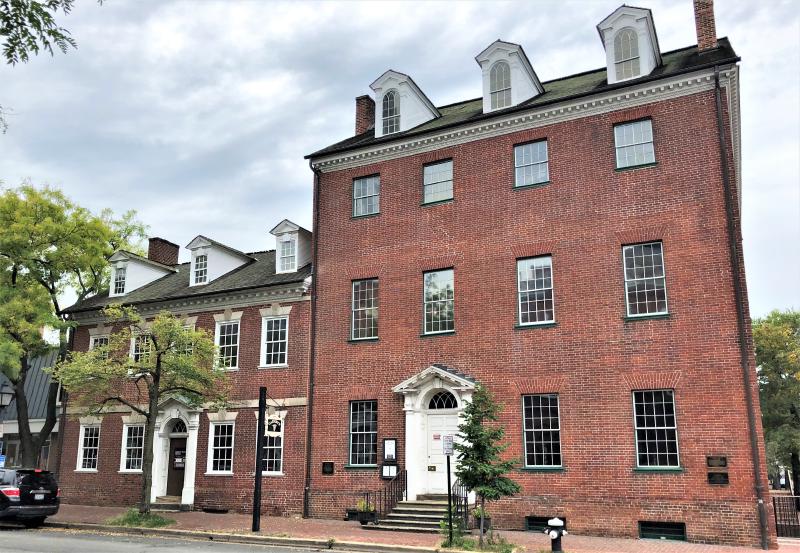
Beyond My Ken · via Wikimedia Commons · CC BY-SA 4.0 134 North Royal Street
An 18th-century tavern complex at 134 North Royal Street that hosted George Washington's final Birthnight Ball in 1799 and served as a …
![Old Loyd [i.e. Lloyd] House, Alexandria, Va.](/images/gtdju7ejdnwoq7p/old_loyd_i_e_lloyd_house_alexandria_va_2rutnb54Yg._hu_952f28a739427277.jpg)
Old Loyd [i.e. Lloyd] House, Alexandria, Va. · Library of Congress, Prints & Photographs Division · http://www.loc.gov/item/2016803285/ 220 North Washington Street
Late-Georgian 1797 townhouse at the corner of North Washington and Queen built by merchant John Wise. Charles Lee, U.S. Attorney General and …
Now
No current occupant on file. Are you, or someone you know, the present occupant? Claim this place to add operating hours, a current photo, and a short note.
Queen Street
Named for Queen Caroline (consort of George II), c. 1749.
Interpretive signs nearby
The City of Alexandria has installed 5 historical interpretive signs within walking distance of this place. Each link below opens the sign's page on this site, with the full image and trail context.
George Washington in Alexandria
556 King St
604 King St
The Law Office of Cohen, Hirschkop & Hall
423 King St
Site of the First Synagogue of Beth El Hebrew Congregation
206 N Washington St
500 King St
Sources
- 1.
Office of Historic Alexandria, walking-tour and historic-marker brochures, accessed 2026-05-01.
Website
- 2.
Atlas Obscura, "Hollensbury Spite House," accessed 2026-05-01, https://www.atlasobscura.com/places/hollensbury-spite-house.
Website
- 3.
Wikipedia, "Hollensbury Spite House," accessed 2026-05-01, https://en.wikipedia.org/wiki/Hollensbury_Spite_House. (Wikipedia in turn cites primary deed records and architectural surveys.)
Website
See something wrong?
Every correction is logged dated to this page. Family history, old photographs, or a citation we missed — everything goes into the file.